
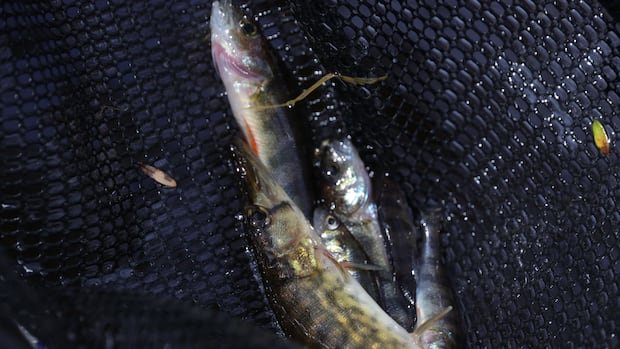

Kejimkujik National Park in Nova Scotia has decided to halt its annual brook trout census due to the detrimental impact of an invasive species on the local ecosystem. The census, which commenced in the 1990s with volunteer fly fishers participating in counting, weighing, and measuring brook trout, aimed to aid Parks Canada in monitoring the species.
Parks Canada disclosed to CBC News that the current census has been paused because of the prevalence of chain pickerel, accounting for 90% of fish caught in the park in western Nova Scotia in 2025. The agency stated that the invasion of chain pickerel has significantly reduced the brook trout population, rendering the census ineffective for statistical analysis.
Chain pickerel, unlawfully introduced to Nova Scotia waters in 1945, made their debut at the park in 2018. Once established, they rapidly dominate the ecosystem by preying on various species such as fish, reptiles, frogs, dragonflies, and even ducklings. Data from the park’s angler diary program revealed a surge in chain pickerel catch rates from 18% in 2020 to over 80% in subsequent years.
Ken Donnelly, executive director of Invasives Canada, expressed the challenges in eradicating chain pickerel once they establish themselves in an area. Despite the disappointment in having to pause the census, he acknowledged the necessity of the decision.
Parks Canada highlighted that Kejimkujik comprises 46 lakes, over 30 streams and rivers, mostly part of the Mersey River watershed, the largest in Nova Scotia. The agency noted the difficulty in completely safeguarding the park or the Mersey River system from chain pickerel due to their widespread presence.
Efforts to mitigate the impact of chain pickerel included the installation of fish barriers, albeit being ineffective due to flooding. Nevertheless, Parks Canada, with volunteer assistance, has successfully removed more than 5,300 chain pickerel. Anglers are mandated to retain chain pickerel caught in Kejimkujik, while native fish species, including trout, must be released back into the water.
Parks Canada plans to continue monitoring brook trout using alternative methods such as the angler diaries program and deploying fyke nets annually to track native fish populations in various water bodies within Kejimkujik. Donnelly recommended shifting conservation efforts to areas not yet invaded by chain pickerel for more effective intervention.
Trevor Avery, a biology and mathematics professor at Acadia University, has been studying chain pickerel in Kejimkujik since their introduction. His research focuses on analyzing the stomach contents of chain pickerel to understand their predatory habits. Avery emphasized the need for population management strategies, ranging from extreme measures like rotenone use to more moderate approaches like targeted fishing.
Andrew Lowles, resource manager at the Nova Scotia Department of Fisheries and Aquaculture, highlighted Nova Scotia’s renowned brook trout fisheries and the historical significance of the region for anglers. He mentioned the appeal of chain pickerel to anglers due to their strong fighting abilities, offering a different fishing experience.
In conclusion, the invasion of chain pickerel poses a significant threat to the ecosystem of Kejimkujik National Park, prompting conservation efforts and monitoring by Parks Canada to address the challenges posed by this invasive species.