
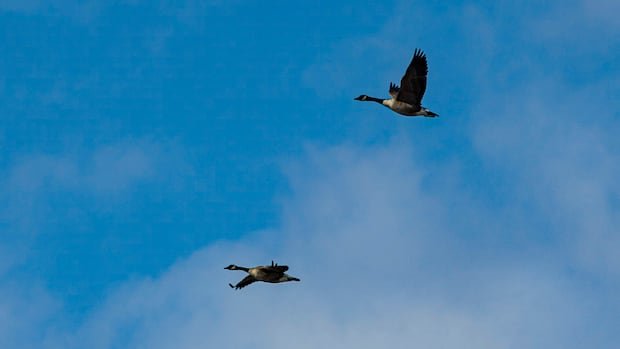

The Canadian Food Inspection Agency has identified a highly infectious strain of avian influenza in several samples taken in southern Manitoba following an unparalleled bird die-off incident. Approximately 500 bird carcasses, predominantly Canada geese, were discovered near waterways in the region in early December. While clusters of deceased birds were spotted near the Red River north of Winnipeg’s Perimeter Highway, the largest concentration was detected in a group of ponds in Niverville.
Biologist Frank Baldwin from the Canadian Wildlife Service informed CBC News that bird samples were sent to the Canadian Food Inspection Agency after testing positive for avian influenza, commonly known as bird flu, to determine the specific strain of the infection. The federal agency disclosed that 38 out of 39 wild bird samples submitted for testing on December 11 were positive for the highly pathogenic H5N1 strain of avian influenza.
University of Manitoba researcher Hannah Wallace, specializing in viral immunology, expressed relief that the samples tested positive for the H5N1 strain. She highlighted that while H5N1 can cause significant disease and mortality in birds, the fact that the strain was identified was reassuring as there were concerns about potential mutations that could pose risks to both bird and human populations.
Wallace indicated that H5N1, the strain detected in the southern Manitoba birds, is predominant among domestic poultry and wild bird populations in North America. She noted that many birds in Canada already have some level of pre-existing immunity to H5N1, emphasizing that weaker or undernourished birds may be more susceptible to contracting the virus.
The researcher raised concerns about the lingering presence of avian influenza in the environment, mentioning that the virus can survive in ponds or river sediment even after bird migration. This situation, she said, could pose risks for bird populations in the upcoming spring migration season.
Avian influenza has been a recurring concern for both scientists and poultry farmers in Manitoba. Rod Wiebe, chair of Manitoba Chicken Producers, highlighted the challenges posed by the contagious and deadly nature of the virus. He noted that while farmers can implement bio-security measures to prevent transmission, wild birds remain a potential source of the virus, particularly during fall and spring migrations.
Candace Lylyk, owner of Breezy Birds Farm in Morris, Manitoba, shared her efforts to protect her poultry farm from wild birds that could carry avian influenza. She emphasized changes in farm operations to minimize risks, including restricting access to the farm and implementing strict hygiene measures to safeguard her livelihood and birds.
Overall, the detection of the H5N1 strain in the southern Manitoba bird population has raised awareness among researchers, farmers, and the public about the ongoing risks associated with avian influenza and the importance of vigilant monitoring and preventive measures to mitigate its spread.