
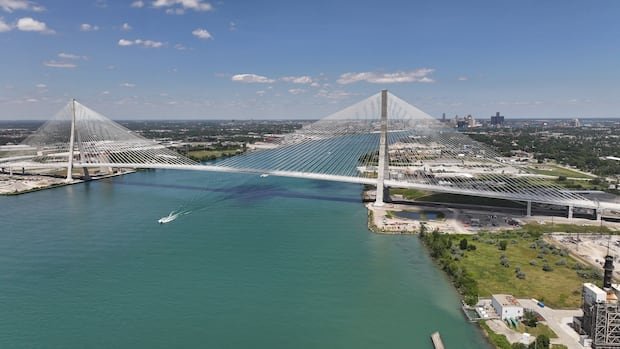

After a quarter-century of planning, seven years of construction, and several delays, the Gordie Howe bridge is finally ready for the first trucks to cross on Monday. This bridge will facilitate the movement of billions of dollars worth of goods through the Windsor-Detroit corridor, leading to time and cost savings for businesses.
Economics professor Moshe Lander from Concordia University emphasized the significant economic potential of the bridge. The existing transportation infrastructure, including the Blue Water Bridge, Ambassador Bridge, and Detroit-Windsor Tunnel, has been strained due to high trade volumes, resulting in congestion and delays at customs plazas.
The Gordie Howe bridge, with its three lanes in each direction, is expected to alleviate these issues substantially. It is projected to handle 44.5% of commercial traffic in the Windsor-Detroit corridor, according to the U.S. Department of Homeland Security. With direct connections to major highways in the U.S. and Ontario, the bridge is set to save truck drivers an estimated 850,000 hours annually in wait times.
The new bridge is anticipated to generate savings ranging from $20,000 to $100,000 per month for trucking companies, depending on their fleet size. Lower tolls compared to the Ambassador Bridge will contribute to cost reductions, along with decreased fuel and wage expenses due to reduced traffic congestion.
With a third of U.S.-Canada trade passing through this corridor daily, the Gordie Howe bridge is poised to have a substantial impact on the economy. The smooth flow of goods across the border is crucial for industries like auto manufacturing, where parts cross multiple times before final assembly.
Efficient border crossings are vital for preventing delays that could disrupt supply chains and production processes. Any efficiency gains translate into cost savings for businesses, potentially curbing inflationary pressures and maintaining stable prices.
Despite the significant benefits, Canada is facing the financial responsibility of the $6.4 billion bridge construction cost. Ownership is shared between Canada and Michigan, with toll revenue distribution being a point of contention. Recent agreements allocate toll revenue for maintenance and operating costs initially, with Canada and the U.S. government sharing the remaining funds for economic development purposes.
While political tensions and tariff threats persist, the importance of the trading relationship between Canada and the U.S. remains paramount. The completion of the Gordie Howe bridge signifies a commitment to strengthening economic ties and ensuring continued cross-border trade for the foreseeable future.