
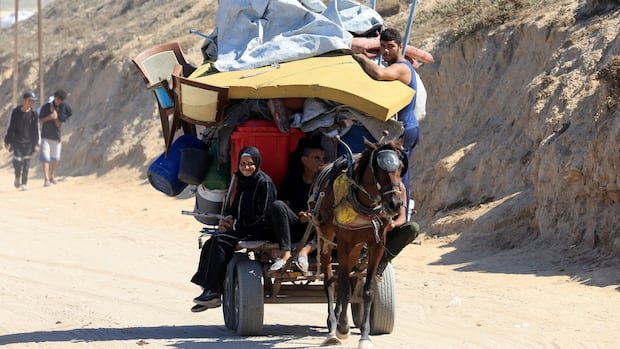

A day following the meeting between U.S. President Donald Trump and Israeli Prime Minister Benjamin Netanyahu in Washington, where they unveiled a ceasefire proposal, Gaza residents are reacting to the plan. The 20-point proposal entails the immediate release of all hostages, living and deceased, and the disarmament of Hamas in Gaza. It suggests temporary governance of the strip by an international body led by former British Prime Minister Tony Blair. Trump has given Hamas a deadline of three to four days to accept the plan.
CBC News videographer Mohamed El Saife interviewed Gazans in Deir al Balah to gather their opinions on the proposal. Despite a desire for an end to the conflict and governmental change after two years of war, their responses to the ceasefire deal varied.
While some cautiously welcomed Blair’s potential involvement, others doubted the plan’s ability to create a Palestinian state that considers their needs. They also questioned the intentions behind the deal.
Regarding Hamas’s role in governance, support for the group appears to have waned after years of conflict. Nabil Al-Hissi expressed a desire for Hamas to be removed from power, labeling the group as corrupt and calling for its eradication from Gaza. He emphasized the need for foreign intervention to achieve this goal. Gamal Al-Barai echoed these sentiments, stating that Hamas does not represent the Palestinian people and attributing the suffering in Gaza to the group’s actions.
Concerning Tony Blair’s role, some in Gaza are skeptical despite his past involvement in the region. Al-Barai harbors doubts about Blair’s ability to bring peace and doubts the intentions of both Blair and Trump in aiding Palestinians.
There are concerns among Gazans about aid reaching the enclave, with many relying on luck and community support for essentials due to border delays. While some view Blair positively, others question his effectiveness in achieving peace.
Wissam Afifa remains skeptical of the peace plan, viewing it as a means for Netanyahu to escape international isolation rather than addressing Palestinian needs. He criticizes the lack of Arab and Muslim representation in the plan’s crafting and emphasizes the importance of including these voices to ensure Palestinian interests are considered.
Afifa agrees that Hamas should not govern in the future but expresses distrust in Blair’s commitment to Palestinian welfare. He calls for the involvement of Arab and Muslim nations in the decision-making process for the future of Gaza to prioritize Palestinian needs.
Overall, Gazans express mixed reactions to the U.S.-backed peace plan, highlighting concerns about representation, aid distribution, and the sincerity of international involvement in resolving the conflict.