
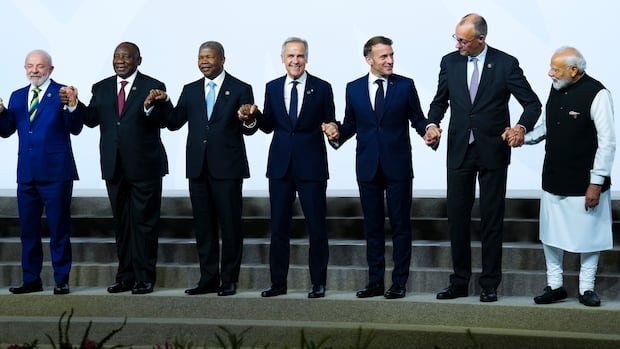

During the recent G20 summit in South Africa, leaders expressed concerns about the group’s future viability and effectiveness due to increasing geopolitical tensions and significant shifts in the global order.
Established in the late 1990s, the Group of 20, co-founded in part by former Prime Minister Paul Martin, has convened annually since 2008 with a primary focus on promoting international economic and financial stability.
The fundamental principle of multilateralism, emphasizing cooperation, compromise, and coordination among nations for mutual benefit, is at the core of the G20’s mandate.
However, the landscape has evolved significantly over the past two decades.
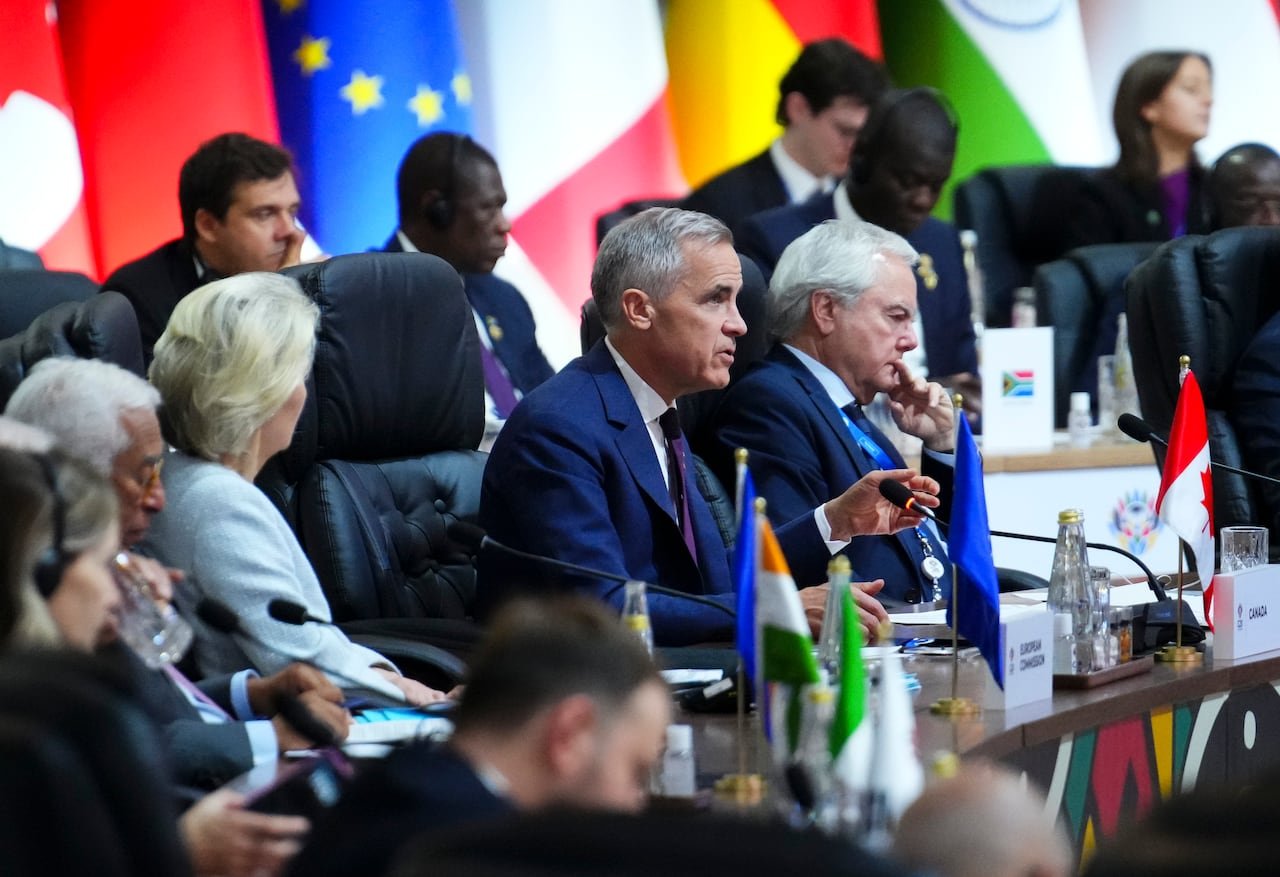
Carney said that as the global economy shifts, there will be opportunities for new roles to be filled by countries like Canada. (Sean Kilpatrick/The Canadian Press)
French President Emmanuel Macron, at the summit’s opening, remarked that “we are struggling to address significant crises collectively at this forum,” suggesting that “the G20 might be reaching the end of a cycle.”
The “rupture” in the global order, as described by Prime Minister Mark Carney, is largely attributed to the policies of the United States and President Donald Trump.
Trump’s trade disputes with various nations and his transactional approach to geopolitical issues like the Ukrainian conflict have shifted the focus of G20 members towards economic security rather than integration.
Even China, a major economy often criticized for destabilizing global security, expressed apprehensions about the future.
-
Analysis
3 ways Canada and China can reset their relations in Trump’s new trade world
-
Carney signs onto AI and technology partnership with India and Australia
China’s Premier Li Qiang highlighted the prevalence of unilateralism and protectionism, raising concerns about the state of global solidarity.
Finland’s President Alexander Stubb, attending the G20 for the first time, echoed worries about the future of multilateralism.
Stubb emphasized a shift towards deal-making, which he believes increases the potential for conflicts.
<h2 class="h2