
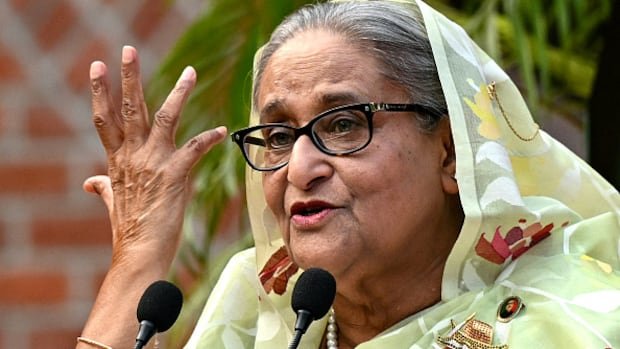

A Bangladesh tribunal has handed down a death sentence to former Prime Minister Sheikh Hasina for her involvement in a deadly crackdown on a student-led protest last year. The ruling, delivered by the International Crimes Tribunal in Dhaka, has sparked concerns of potential unrest as the country gears up for upcoming parliamentary elections.
Hasina, who is currently in exile in India, received a life sentence for crimes against humanity and the death penalty for her role in the killings during the uprising. The verdict, which can be appealed in the Supreme Court, was met with applause in the courtroom.
In response to the ruling, Hasina criticized the tribunal as biased and politically motivated, accusing the interim government of orchestrating a sham trial to eliminate her as a political threat. The prosecution presented evidence of Hasina’s direct orders to use lethal force to suppress the protests, resulting in up to 1,400 deaths and numerous injuries.
The country has been on edge leading up to the verdict, with reports of multiple bomb explosions and vehicle burnings. Since Hasina’s departure, Bangladesh has been under the administration of Nobel laureate Muhammad Yunus, but concerns remain over political stability.
Hasina’s political career, marked by periods of dominance and controversy, culminated in her downfall following the violent protests. Her rule was characterized by allegations of authoritarianism and human rights abuses, although she defended her actions as necessary for the country’s development.
As Bangladesh braces for potential unrest following the tribunal’s decision, security has been heightened in major cities, with paramilitary forces deployed to key locations. The verdict represents a significant turning point in the country’s political landscape and raises questions about its future direction.