
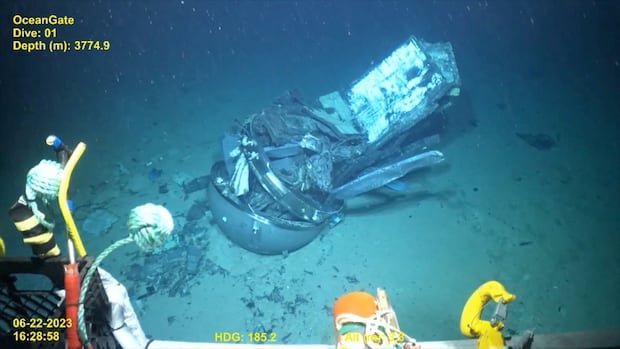

Faulty engineering was determined to be the cause of the fatal implosion of an experimental submersible that resulted in the tragic deaths of five individuals en route to the Titanic wreckage, according to the U.S. National Transportation Safety Board’s latest findings released on Wednesday.
The NTSB’s final report on the catastrophic hull failure and subsequent implosion of the Titan submersible in June 2023 highlighted critical issues with the vessel’s construction. The report revealed that the faulty engineering of the Titan led to the creation of a carbon fiber composite pressure vessel with structural anomalies that failed to meet essential strength and durability standards. Additionally, OceanGate, the entity owning the Titan, was found to have neglected proper testing of the vessel, lacking awareness of its true durability.
The report also pointed out that had OceanGate adhered to standard emergency response guidelines, the wreckage of the Titan could have been located sooner, potentially saving time and resources despite the impossibility of a rescue operation in this tragic incident.
The NTSB report aligns with a previous assessment by the U.S. Coast Guard, which described the implosion of the Titan as avoidable. The Coast Guard’s investigation highlighted significant deficiencies in safety protocols at OceanGate, a private company based in Washington state, noting stark disparities between established safety procedures and actual operational practices.
Following the incident, OceanGate ceased operations in July 2023. The company representatives declined to comment on the NTSB report, though a spokesperson extended sympathies to the bereaved families following the release of the Coast Guard’s findings in August.
The implosion of the Titan claimed the lives of OceanGate CEO Stockton Rush, renowned French underwater explorer Paul-Henri Nargeolet, British adventurer Hamish Harding, and two members of a prominent Pakistani family, Shahzada Dawood and his son Suleman Dawood. This tragic event sparked legal actions and calls for enhanced oversight of privately funded deep-sea expeditions.
In response to the incident, the NTSB report recommended that the Coast Guard assemble a panel of experts to assess submersibles and other pressure vessels intended for human occupancy. Furthermore, it urged the Coast Guard to establish regulatory measures for such vehicles based on the outcomes of the expert panel’s evaluation and to disseminate the findings to the industry.
The Titan had been conducting missions to the Titanic site since 2021, with its final dive occurring on June 18, 2023. After losing contact with its support vessel, the submersible was reported overdue, prompting a rapid mobilization of search and rescue efforts approximately 700 kilometers south of St. John’s.
The subsequent search for survivors in the frigid waters of the North Atlantic off Canada garnered global attention. However, it became evident that there were no survivors, leading to extensive investigations by the Coast Guard and other relevant authorities to ascertain the cause of the tragedy.