
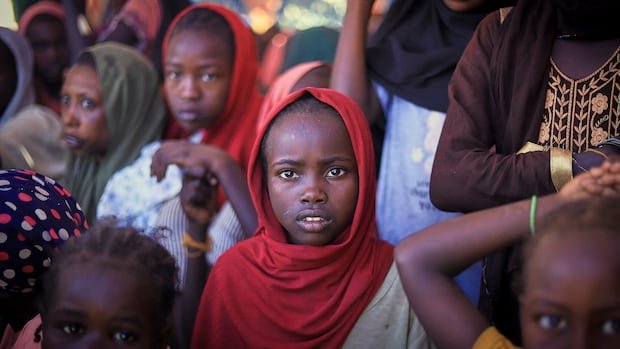

The primary authority on food crises worldwide has identified famine in two regions of conflict-ridden Sudan, specifically in El Fasher, where paramilitary factions have reportedly conducted large-scale killings. The Integrated Food Security Phase Classification (IPC) released a report on Monday indicating that famine has emerged in El Fasher and Kadugli, cities located in the Darfur region and South Kordofan province, respectively. These areas have witnessed a complete breakdown of livelihoods, widespread starvation, severe malnutrition, and fatalities.
Additionally, the IPC highlighted that twenty other regions in Darfur and South Kordofan, which have experienced escalated conflict in recent months, are also facing the risk of famine. El Fasher has been under siege by the paramilitary Rapid Support Forces (RSF) for 18 months, disrupting the supply of essential goods to thousands of inhabitants. Following the city’s capture last week, reports and videos have surfaced depicting RSF atrocities against civilians, including beatings, killings, and sexual assaults, as recounted by witnesses and aid workers.
Kadugli has similarly endured a prolonged RSF siege, with numerous residents trapped inside while the faction seeks to expand its territorial control at the expense of the Sudanese military. The World Food Program previously confirmed famine in ten areas based on IPC data from April. Since April 2023, Sudan has been embroiled in a power struggle between the military and RSF, resulting in over 40,000 reported deaths, though aid organizations assert that the actual toll could be significantly higher. The conflict has displaced more than 14 million individuals, fueling disease outbreaks and plunging parts of the nation into famine.
Efforts are being made to broker a humanitarian truce in Sudan’s war, with a U.S. envoy disclosing collaboration with both conflicting parties. Meanwhile, International Criminal Court prosecutors are working to safeguard evidence from the recent violent incursion in Darfur. The IPC’s report revealed that approximately 375,000 individuals have fallen into famine in Darfur and South Kordofan as of September, with an additional 6.3 million people across Sudan facing “emergency” food insecurity levels.
Save the Children reported in September that food supplies had dwindled in Kadugli due to escalating hostilities, prompting tens of thousands to flee amidst impediments. The IPC’s food insecurity scale designates famine as Phase 5, characterized by severe food scarcity affecting at least one in five individuals or households, acute malnutrition in over 30% of children under five, and malnutrition-related deaths exceeding a specified threshold.
The IPC has previously confirmed famine in select locations, including northern Gaza, Somalia in 2011, South Sudan in 2017 and 2020, and parts of Sudan’s Darfur region in the previous year. Although Dilling in South Kordofan reportedly mirrors the conditions in Kadugli, the IPC refrained from declaring famine due to data limitations. With the RSF consolidating control over Darfur and South Kordofan post the recapture of Khartoum earlier this year, the focus has shifted towards securing supply routes.
Mirjana Spoljaric, President of the International Committee of the Red Cross (ICRC), emphasized that a substantial number of civilians remain trapped in El Fasher without access to essential provisions. The report highlighted the looming threat of famine in neighboring towns, underscoring the urgent need for a ceasefire to avert further loss of life and mitigate acute food insecurity and malnutrition levels.