
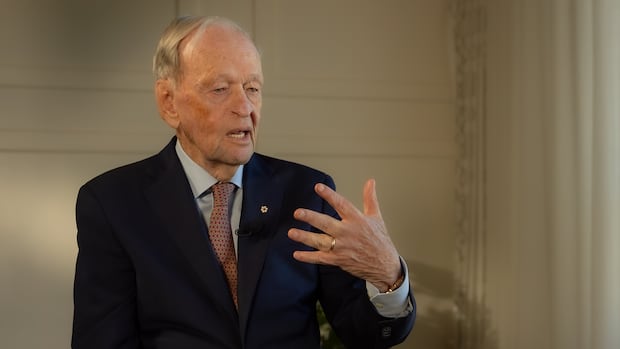

Former Liberal Prime Minister Jean Chrétien has criticized Alberta’s growing separatist movement, asserting that Premier Danielle Smith “cannot engage in double-talk indefinitely” regarding her stance on Ottawa, depending on her own interests.
In an interview with CBC’s The House, which aired Saturday morning, he stated, “Now she seeks federal intervention in British Columbia to assist Alberta, yet expects no assistance in Alberta for the rest of Canada.”
Chrétien urged, “Come on, you can’t keep double-talking like that,” during his discussion with host Catherine Cullen.
His comments came shortly after a conflict arose between Smith and B.C. Premier David Eby concerning Alberta’s intention to present a pipeline proposal to the federal Major Projects Office (MPO) in the spring.
Smith contends that her province must take the lead on the proposal because private companies are hesitant to invest the necessary capital for a pipeline due to current federal regulations, such as the 2019 restrictions on oil tankers in B.C.’s northern waters.
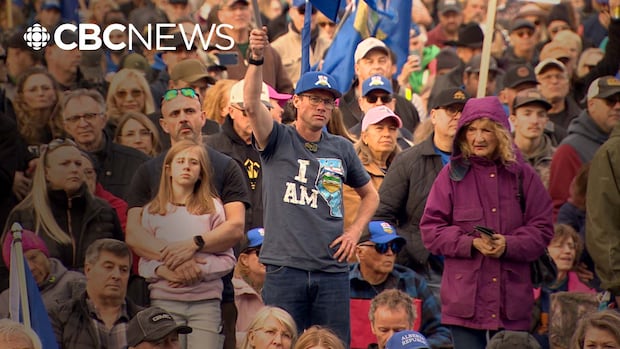
The push for Alberta’s independence got a significant boost this weekend. Thousands rallied in Edmonton to raise awareness of the movement and a referendum question that would inquire if citizens believe Alberta should become a sovereign nation. Sam Samson spoke with some of them.
Alberta has urged the federal government to eliminate the tanker ban, in addition to its proposed emissions cap and clean electricity regulations. Last month, the province stated its intention to introduce legislation enabling it to disregard international agreements signed by Ottawa.
Eby has consistently rejected Alberta’s proposal, claiming it is “not a genuine project” and poses a threat to infrastructure initiatives his administration is pursuing with the backing of local First Nations.
Smith characterizes Alberta’s pipeline proposal as “a litmus test for whether Canada functions as a unified nation,” arguing that other provinces and territories can export their essential products globally while Alberta faces limitations.
Chrétien dismissed Smith’s claims, stating that the province is landlocked and “they have never sold as much oil as they do now, yet they act like they are on the brink of bankruptcy.”
“You know, you’re not isolated in a country. You coexist with other provinces, we are all Canadians, and Canada’s values dictate that we share,” the former prime minister remarked.
A forecast released by S&P Global Commodity Insights in June indicated that oilsands production is on track to achieve a record high this year, with production in northern Alberta projected to increase by five percent in 2025 compared to the previous year.
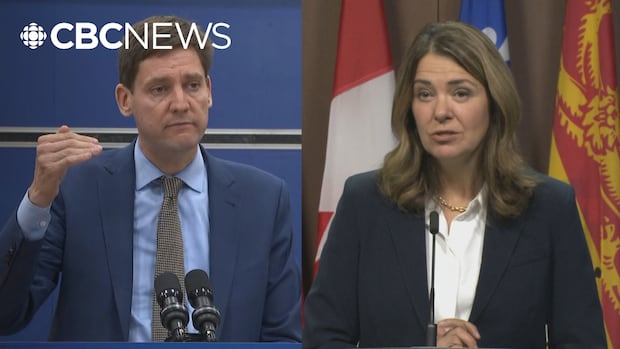
Tensions have escalated between B.C. and Alberta regarding the proposed oil pipeline to B.C.’s North Coast, with Danielle Smith accusing David Eby of being “un-Canadian,” while Eby criticized Smith for promoting what he describes as a fictional pipeline. Katie DeRosa provides more insight into a conflict that is creating divisions among western provinces.
Regarding the possibility of Alberta separating from Canada, the province has not clarified if it intends to move forward with a referendum, despite competing groups battling over a potential referendum question.
Chrétien advised Alberta separatists that “they should all familiarize themselves with the Clarity Act,” which was enacted during his administration and establishes the guidelines for provinces or territories wishing to secede from Canada.
According to the act, provinces or territories seeking to depart must formulate a referendum question. The House of Commons can reject the question if it deems the wording does not accurately reflect the public’s will. Additionally, Ottawa must consult with all regional political parties.
“It’s not as simple as mailing a letter… It’s highly complex now. The question requires approval from the Parliament of Canada. A clear majority is essential,” Chrétien emphasized.
Chrétien on Trump’s interest in Canadian water
During the interview, Chrétien also addressed U.S. President Donald Trump’s trade conflict with Canada and the implications for free trade between the two nations.
Proud of his decision to exclude Canadian water from the North American Free Trade Agreement, which he finalized, Chrétien remarked that this decision will be “extremely significant” for future Canadians.
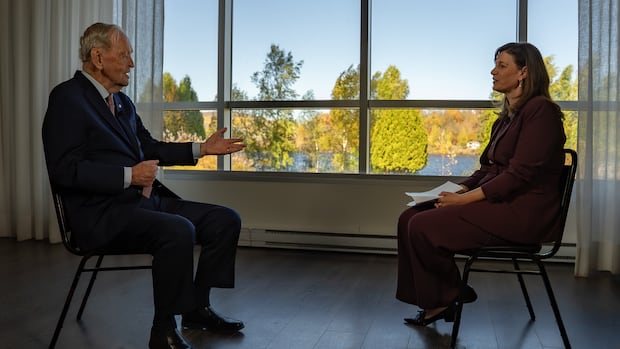
When asked by CBC’s Catherine Cullen if he believes Donald Trump is a threat to democracy, former prime minister Jean Chrétien stated that the current U.S. administration “seems to run away from values” that previously defined the United States.
When questioned about whether Trump seeks Canadian water, Chrétien responded, “Of course he wants it. He desires everything good from Canada.” However, he added, “ambition is one thing, but it’s not free. Negotiations are necessary.”
Chrétien also pointed out that “we never had a genuine free trade agreement” since the Americans joined NAFTA, claiming they “did not respect it during my tenure.”
He elaborated, “When it suited them, they would invoke the free trade treaty to justify their actions. But when it was inconvenient for them, they disregarded it.”
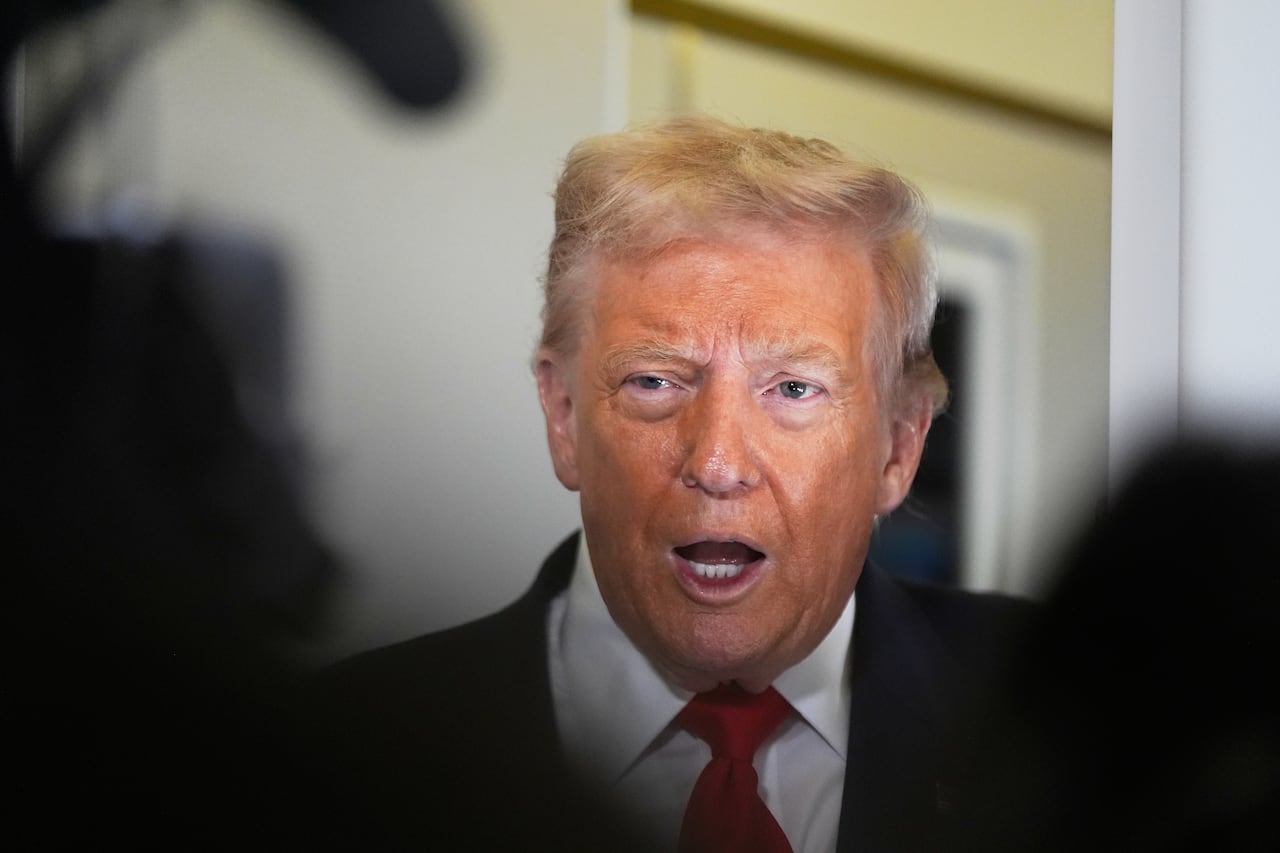
U.S. President Donald Trump renegotiated the NAFTA trade deal during his first term. That new deal, CUSMA, comes up for review next year. (Manuel Balce Ceneta/The Associated Press)
Chrétien further expressed that Trump poses a danger to democracy, as the U.S. president “does not prioritize the rule of law,” which “could lead to significant issues in the United States.”
“Western society is founded on the rule of law,” he stated. “When the rule of law is absent, it leads to daily blackmail, and that is unworkable.”
When asked if world leaders should be more outspoken about Trump’s actions, Chrétien responded that Canada must advocate for its principles but acknowledged the challenges, given that the country needs to market its resources.
“It’s a complicated situation — the world will change — and we’ll need to adapt,” Chrétien concluded.