
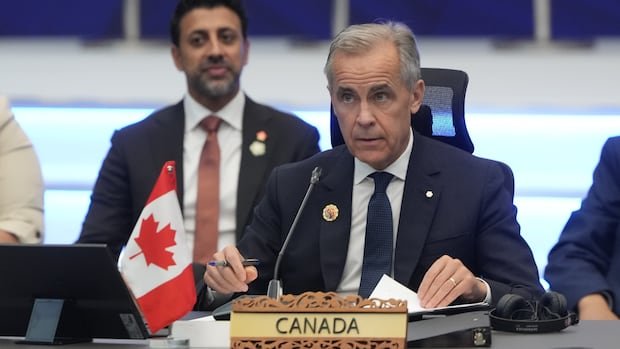

At the ASEAN Summit opening, Prime Minister Mark Carney emphasized the significance of dependable partners who uphold their commitments, subtly contrasting the escalating rhetoric and tariff threats from U.S. President Donald Trump. Trump’s vow to impose an additional 10 percent duty on Canadian goods as retaliation for Ontario’s television ads featuring former president Ronald Reagan’s criticism of tariffs was met with Carney’s restrained response.
Carney refrained from elaborating on the abrupt breakdown of negotiations and expressed readiness to resume talks when the Trump administration was prepared. Meanwhile, Canada would explore alternative trading partners and concentrate on domestic investments. Trump’s threat of a 10 percent tariff hike lacked specifics on affected goods, and he reiterated his discontent with Canada, stating his reluctance to meet Carney.
In Malaysia, Carney reiterated Canada’s commitment to progress in negotiations with the U.S. and its desire to play a more significant role in the region. The Liberal government aims to finalize a free-trade deal with ASEAN next year, emphasizing respect for trade agreements and the rule of law amidst a shifting global trade landscape.
The possibility of Carney and Trump resolving their feud at the summit was dashed by the president’s disinterest in dialogue. The ongoing trade tensions were underscored by Goldy Hyder, who stressed the need for unity in navigating trade disputes and highlighted broader concerns beyond the current conflict.
Malaysian Prime Minister Anwar Ibrahim’s address mirrored the challenges of economic uncertainty and the importance of cooperation amid growing global contestations. Trump’s visit to Kuala Lumpur saw him facilitating a peace agreement between Thailand and Cambodia, underscoring the complexities of international relations.
The ASEAN Summit served as a platform for diplomatic engagements and trade discussions, with leaders navigating the intricate dynamics of global trade relationships amidst escalating tensions.