
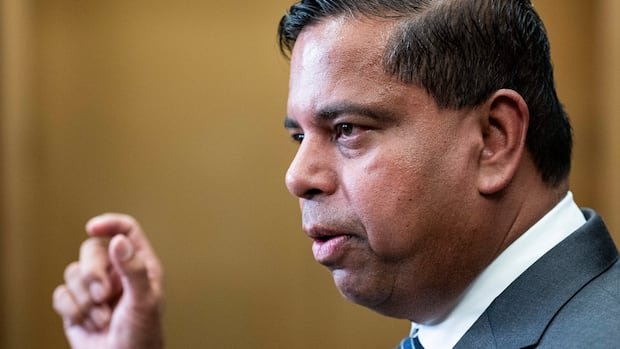

The Canadian government has decided to divide its border security bill into two separate parts to allow for quicker passage of some measures while affording Canadians more time to assess other potentially contentious provisions. Bill C-12, unveiled on Wednesday, incorporates various aspects from a prior bill introduced in June aimed at bolstering the Coast Guard’s responsibilities, tightening immigration and refugee protocols, improving information sharing on sex offenders, and regulating chemicals used in illegal drug production.
Public Safety Minister Gary Anandasangaree confirmed that the government remains committed to advancing the initial bill, C-2, which seeks to grant authorities expanded search powers for mail and access to personal data. Consequently, the proposed federal border security initiatives will proceed through Parliament via two distinct legislative pathways, with Bill C-12 likely moving forward first. Subsequently, Bill C-2 will undergo parliamentary consideration, with components duplicated in C-12 omitted to prevent redundancy.
The government’s revised strategy, initially reported by CBC News, has faced backlash from civil society organizations critical of the border measures for potentially infringing on liberties and human rights. Tim McSorley, the national co-ordinator of the International Civil Liberties Monitoring Group in Ottawa, criticized the government’s decision to split the bill rather than address its perceived flaws directly. He advocated for the withdrawal of both bills, emphasizing the need to safeguard due process protections for vulnerable individuals.
Similarly, Karen Cocq, representing the Migrant Rights Network, expressed concerns about the renewed bill’s implications for due process rights and urged its withdrawal. Anandasangaree defended the decision not to revise Bill C-2 during the legislative process due to stringent guidelines governing bill amendments, noting the legislation’s intent to enhance border security, combat organized crime, curb fentanyl trafficking, and combat money laundering.
The bill was a response to pressure from the U.S. administration under President Donald Trump, citing concerns over irregular migrant flows and fentanyl trafficking to justify the imposition of tariffs on Canadian goods. Although the legislation garnered support from law enforcement agencies, fentanyl experts, and child protection advocates, over 300 civil society groups called for its withdrawal, citing concerns about its impact on freedoms, refugee rights, migrant rights, and Canadian privacy.
The minority government faced challenges in securing backing from opposition parties for the bill, particularly in light of apprehensions raised by the International Civil Liberties Monitoring Group regarding proposed asylum restrictions and enhanced surveillance powers. Concerns also centered on potential amendments to the Criminal Code and legislation governing the Canadian Security Intelligence Service, facilitating broader access to subscriber information and enabling warrantless police access in urgent situations.