
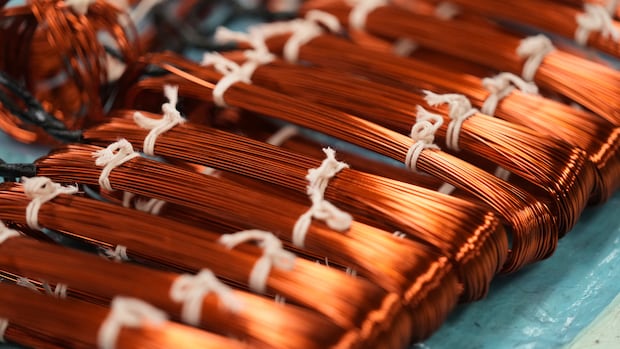

Canada has officially classified specific critical minerals as a national security priority through the Defence Production Act. This action will enable the federal government to bolster the mining sector by ensuring a buyer and establishing a minimum price for these resources.
This initiative was revealed during a G7 meeting focused on energy and the environment in Toronto on Friday, where discussions were held regarding strategies to mitigate China’s significant influence over critical mineral production. These minerals are vital for contemporary technologies such as electric vehicles and renewable energy, prompting growing concern among Western nations about China’s grip on their supply chains.
“We must establish certainty in demand and pricing to facilitate the construction of mines and processing facilities,” stated Canada’s Energy Minister Tim Hodgson during a press conference at the G7 gathering.
Hodgson revealed that G7 nations are committing $6.4 billion towards 26 critical mineral projects in Canada to enhance the local mining industry and create alternatives to minerals sourced from China.
The funded projects encompass Nouveau Monde Graphite’s Matawinie mine located near Montreal, Rio Tinto’s Scandium production facility (rare earth elements utilized in aerospace and defense) in Sorel-Tracy, Quebec, and Torngat Metals’ Strange Lake project in Quebec, which focuses on rare earths. The minimum price established for purchasing these minerals remains confidential for security and commercial reasons, as per the government’s statement.
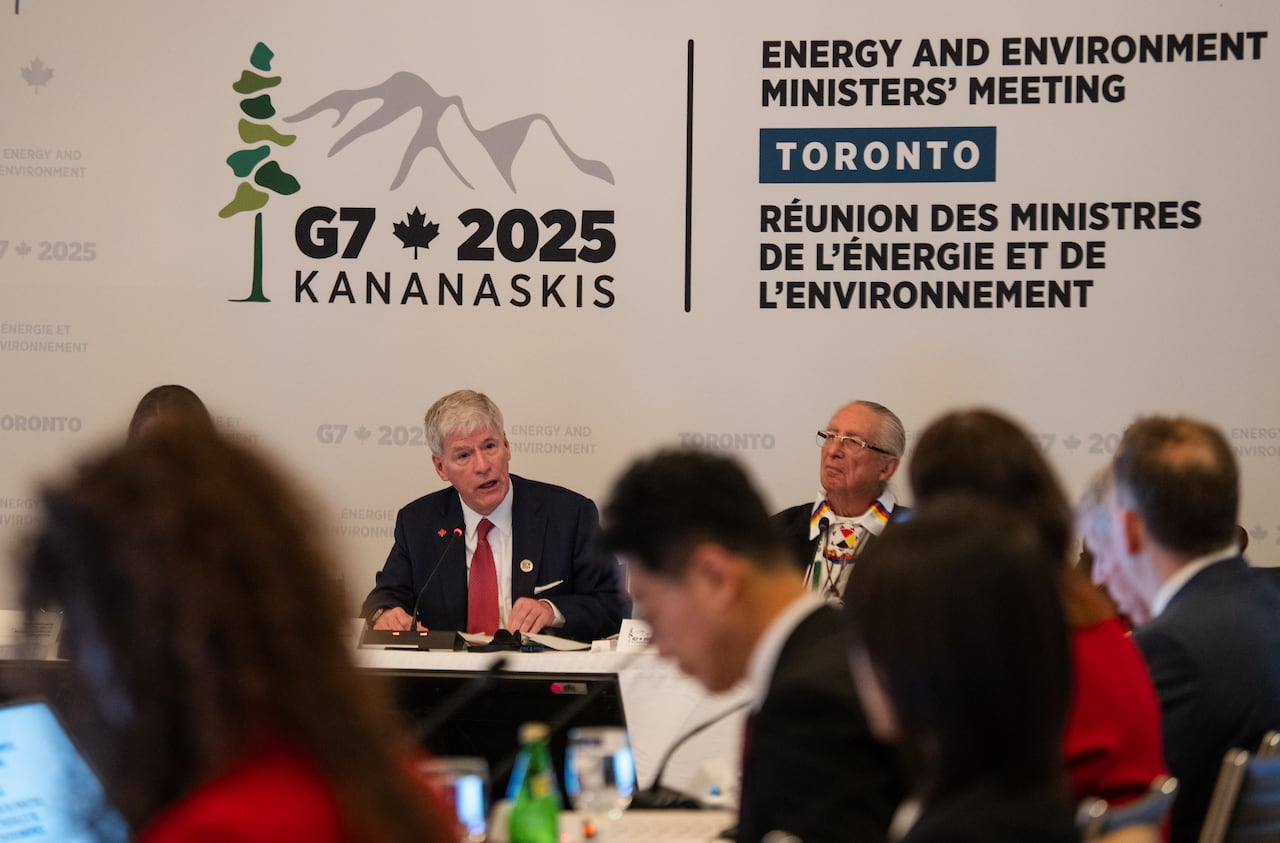
Energy Minister Tim Hodgson is seen at the G7 Energy and Environment Ministers’ meeting in Toronto on Thursday. (Laura Proctor/The Canadian Press)
Addressing China’s Influence
Experts in the industry assert that without government intervention, Canadian businesses attempting to establish themselves would face price competition from Chinese suppliers.
“For certain commodities dominated by China, launching a project is nearly impossible. We have initiatives across the country that struggle to secure financing due to perceived vulnerabilities,” explained Pierre Gratton, president of the Mining Association of Canada.
“China could quickly enter the market, slash prices, and render the project unviable.”
Hodgson has been engaging in discussions with his G7 counterparts — which include the U.S., U.K., Germany, Japan, France, Italy, and Canada — for several months about collaborating on a new critical minerals production coalition, which he refers to as a “buyers club.”
The concept involves G7 countries investing in critical minerals initiatives within the group, establishing agreements that would help set price floors or long-term purchasing contracts, thereby enhancing critical minerals production in Western nations.
This initiative responds to the escalating unease surrounding China’s global dominance in the critical minerals supply chain. China is the primary refiner of 19 out of 20 essential strategic minerals, holding an average market share of 70 percent, as reported by the International Energy Agency.
In recent years, China’s market share has continued to expand, coinciding with the increasing necessity for these critical minerals across a variety of emerging technologies, such as battery-electric vehicles and solar panels.
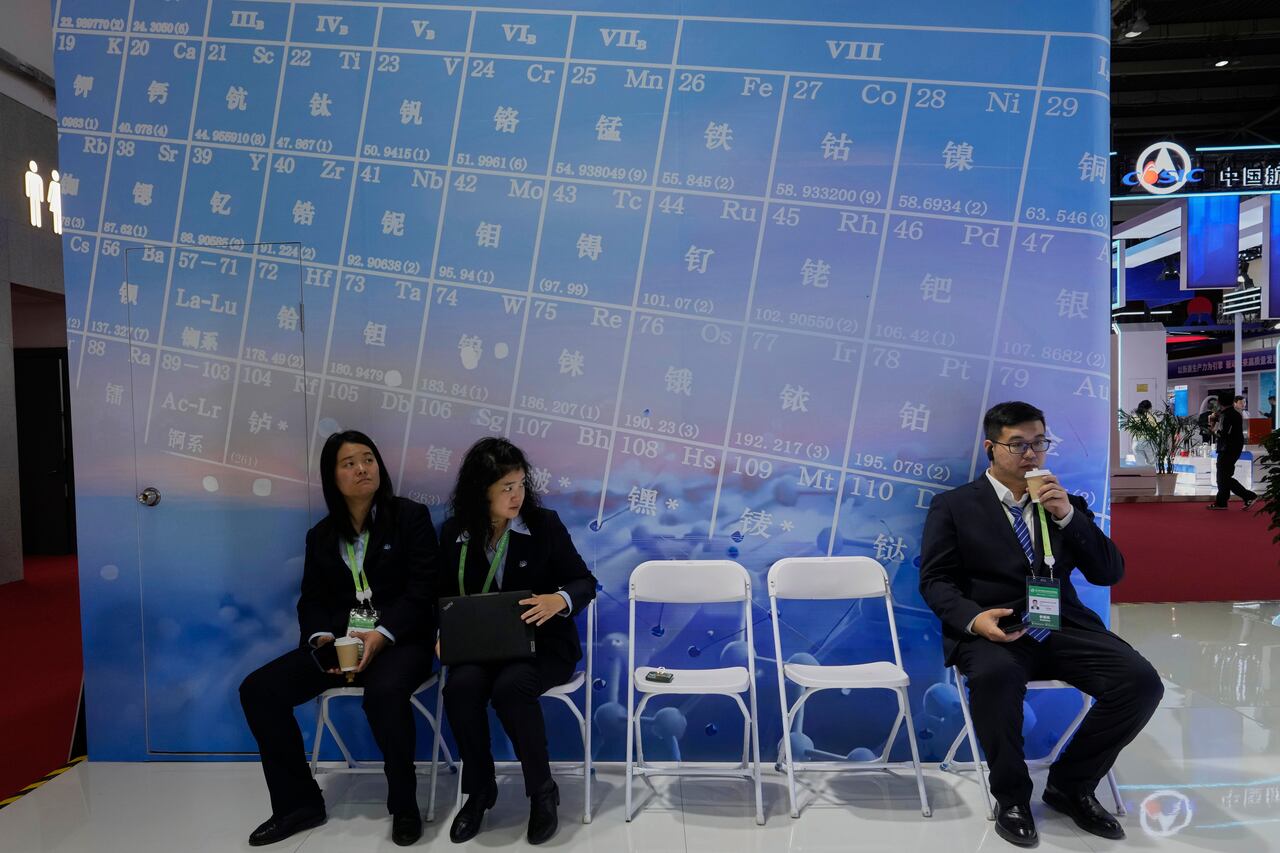
Visitors are seen at an expo on mineral supply chains in Beijing in 2024. China controls most of the supply chain of several key critical minerals and its share has been growing. (Ng Han Guan/The Associated Press)
“Canada is rich in many of these critical minerals, representing a multi-billion dollar opportunity to responsibly develop these resources,” noted Eyab Al-Aini, senior research associate at the Canadian Climate Institute.
However, he pointed out that Canada’s resources remain largely untapped. His team has evaluated six priority minerals — copper, lithium, graphite, cobalt, nickel, and rare earths — all of which could see a significant increase in demand. According to the analysis, Canada’s domestic demand for critical minerals alone could reach $16 billion annually by 2040, primarily driven by a local battery manufacturing sector.
“By 2025, two-thirds of all global energy investments will be directed toward clean technologies, and many of these technologies that the world will require depend on critical minerals,” Al-Aini added, referring to the rising investments in clean technologies such as solar and wind energy, which are outpacing those in fossil fuels.