
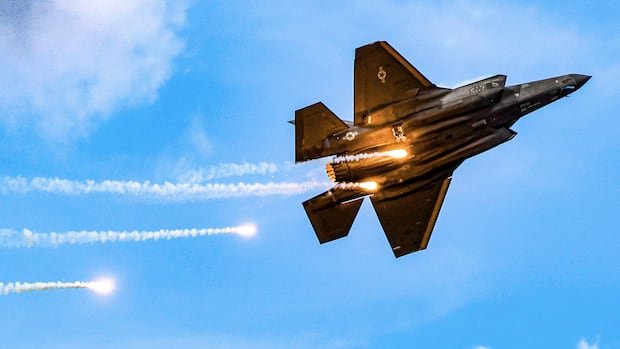

Canada is continuing to progress with the F-35 fighter program at full speed unless instructed otherwise, as confirmed by a senior Department of National Defence official during a House of Commons committee session. Deputy Defence Minister Stefani Beck provided testimony at the tri-party public accounts committee meeting, which is delving into the recent auditor general’s report on the escalated costs associated with acquiring the stealth jet.
Following Prime Minister Mark Carney’s directive last spring for a review of the $27.7 billion purchase from Lockheed Martin, no official decision has been announced yet regarding the acquisition of 88 fighters. Beck informed the committee members that the current directive is to uphold the existing contract arrangements until any new instructions are received.
Canada has committed to procuring a minimum of 16 F-35s, with some already paid for and preliminary investments made for others. The initial batch of jets is anticipated to be delivered next year to a U.S. air force base for training purposes. Beck emphasized that the ultimate decision rests with the government, with public servants like herself providing factual information for elected officials to make informed choices.
Members of the Conservative party on the committee expressed strong support for the F-35 program and urged swift progress. Lt.-Gen. Jamie Speiser-Blanchet, the new head of the Royal Canadian Air Force, was questioned about the feasibility of operating a mixed fleet of fighters. While acknowledging the need to manage both current CF-18s and the upcoming F-35s, she highlighted the potential challenges and increased costs associated with operating two separate fleets.
Speiser-Blanchet stressed the importance of transitioning to advanced fifth-generation fighters sooner due to the capabilities of Canada’s adversaries, such as China and Russia. The defense officials defended the cost increase in the F-35 program, attributing it partly to changes mandated by the United States, including delayed construction projects and fluctuating exchange rates affecting the program’s budget.
The timing of the prime minister’s decision remains uncertain, causing tension with U.S. Ambassador Pete Hoekstra, who has raised concerns about maintaining a mixed fighter fleet impacting Canada’s interoperability within NORAD. However, retired Canadian air force major-general Duff Sullivan argued that operational compatibility is more about shared tactics and procedures rather than the specific aircraft types used.