
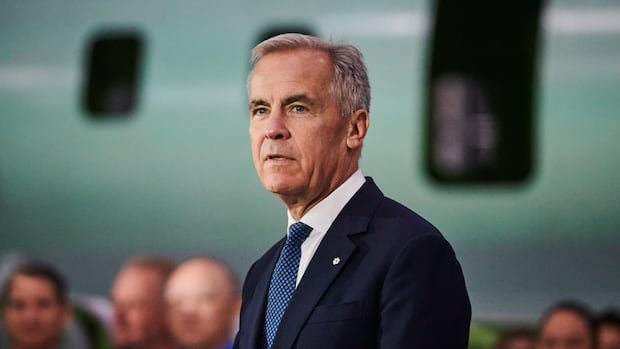

The Canadian government has recently removed more counter-tariffs on American goods than previously announced, as per an order-in-council released online. The latest notice indicates that, except for sectoral tariffs related to steel, aluminum, and auto industries, all retaliatory tariffs imposed by Canada have been eliminated. This action seems to contradict Prime Minister Mark Carney’s earlier statements regarding the decision.
In August, Prime Minister Carney pledged to lift counter-tariffs on U.S. goods falling under the Canada-U.S.-Mexico Agreement (CUSMA). This move was intended to align with President Donald Trump’s imposition of 35% tariffs on Canadian goods not covered by the free trade agreement. However, the official government order-in-council reveals that even non-CUSMA-compliant products crossing the border will not face counter-tariffs, indicating that Canada’s policy is not entirely reciprocal as previously portrayed by federal authorities.
According to William Pellerin, an international trade lawyer and partner at McMillan LLP, the government may have aimed to project a more reciprocal stance towards the U.S. by announcing the tariff removals. The announcement was made by Carney on August 22, while the official notice was published on August 29. The exact timeline of the policy shift remains unclear as the finance minister’s office declined to provide details on this matter.
Although the revenue potential of counter-tariffs on non-CUSMA-compliant goods is uncertain, Pellerin suggests that the amount generated would likely be minimal and insufficient to cover the costs of additional staff required for enforcing these tariffs at the Canada Border Services Agency. Consequently, the decision to eliminate counter-tariffs altogether was deemed more practical given the substantial compliance and enforcement efforts involved for minimal gains.
While most goods crossing the border are eligible to become CUSMA compliant, meeting the specific criteria and completing the necessary paperwork can be burdensome and costly, according to trade experts. Therefore, the decision not to pursue non-sectoral counter-tariffs has been characterized by Pellerin as an exercise in bureaucratic restraint.
A spokesperson for Finance Minister François-Philippe Champagne emphasized the government’s commitment to advancing trade talks with the United States, aiming to negotiate a favorable deal that safeguards Canadian workers and industries while promoting economic priorities. This approach has drawn criticism from Conservative Leader Pierre Poilievre, who accuses the prime minister of making significant concessions to the U.S. without securing equivalent benefits for Canada. Poilievre has humorously remarked on Carney’s negotiation tactics by suggesting that “his elbows have mysteriously gone missing.”