
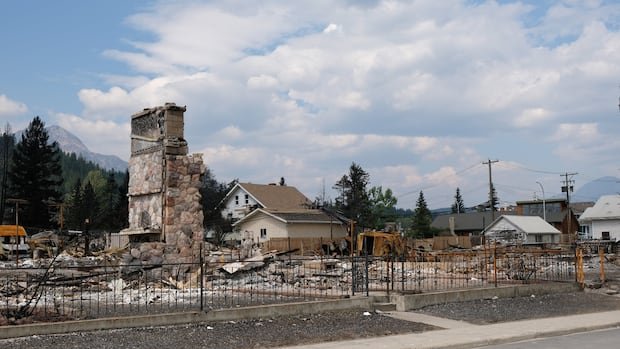

Canada is experiencing longer, more extensive, and increasingly destructive wildfire seasons, as revealed by a comprehensive analysis of fire records spanning six decades conducted by the Canadian Forest Service. The study highlights a shift towards fewer but larger wildfires burning more land compared to the past, a trend initially identified by federal scientists years ago.
A study published in 2019 by fire scientists at Natural Resources Canada indicated a steady increase in wildfire activity since the mid-20th century, attributed to escalating temperatures and prolonged fire seasons. The latest research, featured in the Canadian Journal of Forest Research, extends the analysis up to 2024 utilizing advanced satellite mapping technology and data from severe fire seasons such as 2021, 2023, and 2024.
Findings show a continuous rise in the area burned by wildfires across various Canadian eco-zones, even in traditionally lower-risk regions like the Pacific Northwest and Atlantic Canada, previously considered less prone to wildfires due to wetter conditions but now displaying steady or escalating fire trends.
Notably, the study underscores that the largest wildfires are increasingly responsible for a significant portion of the damage. While lightning remains a primary cause of wildfires, human-induced fires have been on the rise since the early 2000s, attributed not to policy failures but to hotter and drier conditions that make fire control more challenging.
Chelene Hanes, a research scientist with the Canadian Forest Service, emphasized that the escalation in human-caused fires, particularly the larger ones, is linked to drier fuel conditions. The impact of these massive wildfire events is becoming more pronounced on a national scale, with firefighting efforts shifting towards containment and protection due to the scale and intensity of these fires.
The changing wildfire landscape is also affecting Canada’s insurance industry, with rising wildfire risks reshaping losses, premiums, and long-term housing decisions nationwide. Insurance data reveals a significant increase in wildfire-related losses in recent years, prompting adjustments in coverage pricing for high-risk communities to manage overall risk effectively.
In response to the escalating wildfire risk, insurers are adapting their coverage strategies in highly exposed areas, potentially leading to higher premiums or policy modifications. Despite these adjustments, wildfire coverage remains a standard inclusion in home insurance policies in Canada, ensuring widespread availability of protection against wildfire-related damages.