
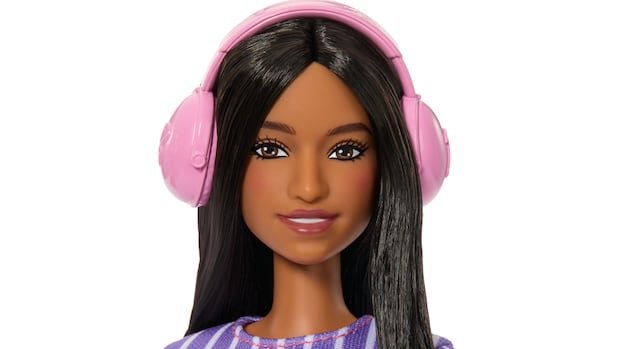

Barbie, a global icon and business empire, has undergone numerous transformations since its debut in 1959 to represent diverse styles, races, professions, and abilities. The latest release of an autistic Barbie by Mattel has sparked a crucial conversation about representation in the toy industry.
Unveiled on Monday, the autistic Barbie features visual characteristics and accessories associated with individuals on the autism spectrum, developed in consultation with the Autism Self Advocacy Network. This release is a significant moment for many, including social media influencer Katherine L’Etang, a mother of two autistic children. While some celebrate the doll’s representation, others express concerns that it may perpetuate stereotypes about autism.
The doll’s design, including features like eye contact aversion and stimming gestures, has drawn mixed reactions. Some argue that the doll’s portrayal may not accurately represent the diverse traits of autistic individuals. Suggestions have been made for a more inclusive approach, such as offering customizable accessories for children to represent themselves.
Despite differing opinions, the conversation surrounding the autistic Barbie has been deemed valuable, prompting discussions on the representation of autism. While criticisms exist, there is acknowledgment of the effort to include diverse groups in toy lines. The hope is that this initiative will encourage other companies to prioritize inclusion, even if their efforts are not flawless.