
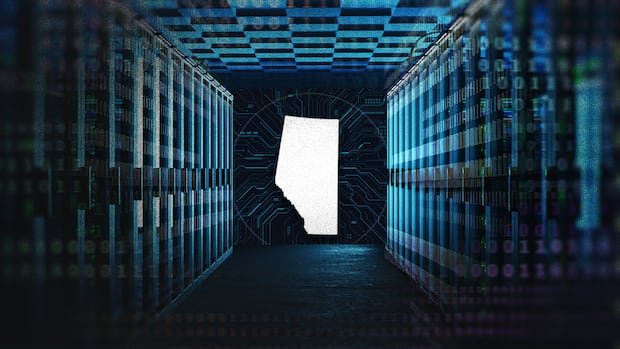

Albertans tuning in to the recent state of the union address by the U.S. president might have found similarities in Donald Trump’s stance on AI data centers with Alberta’s strategy. The UCP government in Alberta has been advocating for the “bring your own generation” concept to attract more than $100 billion in investments for AI data centers. Despite the U.S. having a more established AI infrastructure, Alberta aims to leverage its favorable conditions like a cold climate, ample real estate, and a deregulated electricity market to seize opportunities in the AI industry.
Comparing Alberta’s data center expansion with the U.S., there are notable differences in their approaches. The Alberta Electric System Operator (AESO) identified 1,200 megawatts available for significant data center projects, ensuring grid reliability while accommodating the increasing demand. In contrast, the U.S. has seen rapid data center growth outpacing capacity planning efforts in some regions, raising concerns about electricity supply adequacy and pricing.
The Pew Research Center reported that U.S. data centers consumed a substantial portion of the country’s electricity, with projections indicating a 133% increase in electricity consumption by 2030. In Alberta, although several large data center projects have been proposed, many are still in early development stages or pending approvals. The meticulous approach taken by Alberta, allocating a fraction of its total power load for data centers, is seen as prudent by experts like Ryan Li from the University of Alberta.
In the U.S., the surge in electricity demand from AI data centers has led to utility cost hikes for consumers, prompting initiatives to shift these costs to technology companies. Affordability concerns and community opposition have emerged in both the U.S. and Alberta, with residents expressing apprehensions about escalating utility bills and environmental impacts. Alberta’s Utilities Statutes Amendment Act, passed in December, mandates data center developers to cover infrastructure upgrades necessary to support the power demands of these facilities.
As grid reliability faces challenges in both the U.S. and Canada due to data center proliferation and aging infrastructure, the importance of strategic planning and infrastructure development is underscored. While Alberta’s phased approach aims to preserve reliability, the rapid pace of AI data center expansion poses a test to grid stability. Maintaining operational efficiency and grid stability becomes paramount, especially in regions like Alberta with relatively isolated grids.
Overall, the evolution of AI data center projects in Alberta and the U.S. highlights the need for a balanced approach that addresses power demands, grid reliability, and community concerns while fostering innovation and economic growth in the rapidly advancing AI industry.