

The Alberta Teachers’ Association has announced a provincewide strike scheduled to start on October 6, following a decisive vote by its members against a recent tentative agreement with the province. Representing 51,000 public, Catholic, and francophone teachers, the union saw 89.5 percent of the 43,362 votes cast opposing the deal, while 10.5 percent supported it.
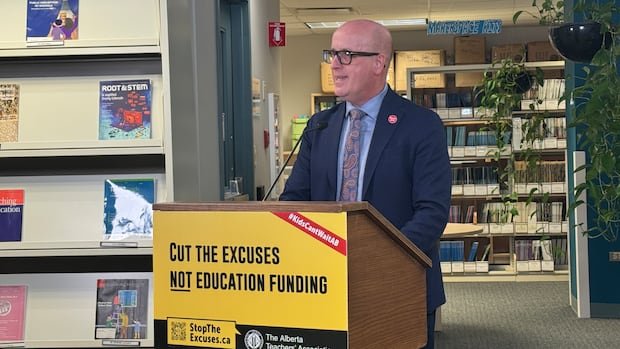
During a press briefing on Monday evening, ATA president Jason Schilling expressed his lack of surprise at the rejection of the latest offer by teachers. He emphasized that the proposed agreement did not adequately address teachers’ needs, lacked substantial improvements to student classroom conditions, and failed to show the necessary respect towards teachers.
If teachers, vice-principals, and principals proceed with the planned strike next week, it would mark the largest teacher walkout in Alberta’s history, potentially impacting over 700,000 K-12 students. Unlike a previous teacher strike in 2002 that did not involve all Alberta teachers, the upcoming strike would be the first provincewide teacher walkout in the province’s history.
The rejected offer included a proposed 12 percent wage increase over four years and the transition of most teachers to a unified pay grid by September 2026. Additionally, some teachers could have seen raises of up to an extra five percent upon moving grids. The ATA highlighted that teacher wages had only increased by 3.8 percent over the last six years, significantly lagging behind the nearly 21 percent rise in the cost of living in Alberta.
Furthermore, the offer entailed a commitment from the government to create 3,000 net new teaching positions across the province by August 2028, along with 1,500 additional educational assistant roles. The province also pledged to cover the $100 cost of COVID-19 vaccines for teachers opting to receive them.
Schilling revealed that 94 percent of eligible members participated in the vote on the latest contract offer. He emphasized that the high turnout and overwhelming rejection of the deal should serve as a clear message to employers that a significantly improved proposal is necessary to resume negotiations with teachers.
In response to the rejection, Finance Minister Nate Horner expressed disappointment, questioning whether the Alberta Teachers’ Association truly comprehended the desires of its members. Schilling countered this by explaining that the ATA had suggested hiring 3,000 teachers as a last resort, emphasizing the employers’ reluctance to consider limits on class sizes or students with complex needs.
Janelle Melenchuk, a teacher and parent from Red Deer, voiced her support for the rejection of the offer, citing concerns about the practical impact of the promised additional staff and the potential for the government to backtrack on its commitments. She emphasized the necessity of taking a stand against the current conditions in schools, echoing the sentiments of many teachers who feel overwhelmed and under-resourced.
Premier Danielle Smith acknowledged the need for discussions with teachers regarding the inclusion of more educational assistants in classrooms and the construction of new schools but noted that such initiatives require time to materialize. Amidst growing discontent among teachers and parents, the government plans to address the situation in a news conference scheduled for Tuesday in Calgary to provide updates on financial and educational supports in the event of a teacher strike.