
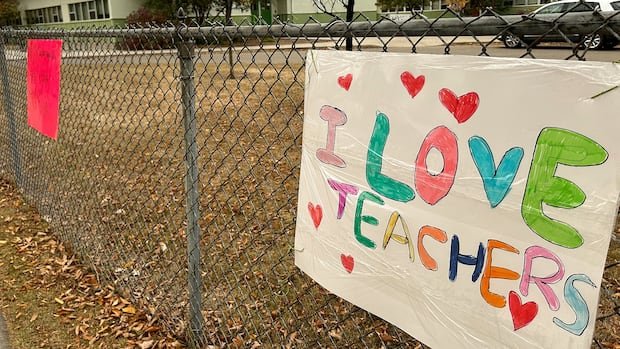

Approximately 51,000 teachers in Alberta initiated a strike on Monday morning and were subsequently issued a lockout notice.
As a result of the inability to reach an agreement between the teachers’ association and employers, schools across Alberta were closed on Monday.
The Teachers’ Employer Bargaining Association (TEBA), which represents school boards negotiating for Alberta’s public, Catholic, and francophone teachers, announced a lockout notice effective starting Thursday.
The Alberta Teachers’ Association (ATA) acknowledged the expected government lockout as a response to the teachers’ strike.
According to the Canadian Industrial Relations Board, a lockout is an employer’s tactic to push a union into accepting employment terms and a collective bargaining agreement.
ATA President Jason Schilling expressed reluctance towards striking, emphasizing the educators’ dedication to public education despite the current standstill.
This marks the first provincewide teachers’ strike in Alberta’s history.
Alberta Finance Minister Nate Horner urged the association to resume negotiations, calling the situation a sad day for the province.
Over 750,000 students are impacted by the strike and subsequent class cancellations.
The Alberta government has no immediate plans to introduce back-to-work legislation for teachers and encourages reaching a resolution at the bargaining table.
Negotiations between ATA and TEBA are ongoing, with discussions in progress to bridge their differences.
Jason Foster, a labor relations expert, explained on CBC’s The Homestretch the employer’s perspective on lockouts during contract disputes.
The lack of consensus between the parties indicates a significant gap that needs to be addressed for a potential resolution.
School districts advised families against dropping off students at school or bus stops and recommended bringing necessary student belongings home in anticipation of an extended strike.
The provincial government is providing financial support to families affected by the strike, offering $30 per day per child during class cancellations.
In the event of an extended strike, child-care subsidies and educational resources will be adjusted, with additional support measures in place.
Support for educators
A substantial number of individuals gathered at various locations in Alberta to demonstrate support for teachers and public education.
Community members expressed their concerns and opinions regarding the government’s role in the ongoing contract dispute.
Classroom conditions and pay at issue
The expired contract between teachers and employers led to heightened tensions, particularly regarding salary increases and classroom conditions.
Though tentative agreements have been proposed, the majority of teachers rejected the offers, leading to the current strike situation.
The concerns raised by teachers revolve around inadequate salary adjustments and insufficient measures to address classroom overcrowding and student needs.
Negotiations are ongoing, with a focus on addressing the critical issues raised by educators for a mutually beneficial resolution.
The need for additional teachers to meet recommended class sizes is a pressing issue that requires prompt resolution for the benefit of students and educators.
No class-size caps
The government’s stance on class-size caps due to school space limitations has been a point of contention in the negotiations.
Discussions continue between the parties as they seek common ground on various aspects, including classroom conditions and educational standards.
Ongoing conversations and efforts are being made to find a comprehensive agreement that addresses the concerns raised by teachers and ensures a conducive learning environment for students.
Former cabinet minister Peter Guthrie emphasized the need for increased funding and support for K-12 education, urging a collaborative approach to resolve the current impasse.
The government’s responses to these concerns and recommendations remain pending, indicating a continued dialogue is necessary for reaching a resolution.