


Several doctors in Alberta have reported a troubling rise in new parents either questioning or outright refusing vitamin K injections, a practice that has been standard for newborns for many years.
Infants in Canada receive vitamin K shots as they are generally born with insufficient levels of this vitamin, which is crucial for blood clotting and preventing severe bleeding.
The Canadian Paediatric Society and other reputable medical organizations advocate for all newborns to receive this injection within six hours of their birth.
Dr. Stephanie Cooper, a high-risk obstetrician based in Calgary, stated, “I have noticed a notable uptick in parents expressing their reluctance to administer vitamin K to their baby.”
Cooper explained that some parents voice a lack of trust in the injection but struggle to explain their reasons.
She added that others are falling victim to misinformation circulating on social media platforms like TikTok, with some mistakenly linking the injection to autism.
- We analyzed 200 cancer and autism videos on TikTok and found the majority contain misinformation
- The internet is full of misinformation. That’s by design, experts say
“I am concerned because this is just one of many instances where individuals are making medical choices based on sources that lack scientific backing or real evidence,” she observed, noting the shift over recent years.
“There will be individuals who might follow this trend … and as a result, there could be unfortunate outcomes.”
Risk of serious bleeding
Newborns are commonly born with low vitamin K levels due to minimal transfer through the placenta. Furthermore, breast milk does not supply enough vitamin K, and it takes time for infants to start producing their own.
Dr. Carrah Bouma, a pediatrician in Calgary, confirmed that vitamin K injections have been safely administered for many years.
“This has been a standard practice in Canada since the 1980s and has been recommended since the 1960s,” she noted.
Bouma explained that babies who do not receive a vitamin K injection, which is administered in the thigh muscle, face the risk of spontaneous bleeding.
“I am deeply concerned that infants may suffer complications from severe and preventable conditions like a major gut bleed or a serious brain bleed that could lead to lifelong issues such as cerebral palsy or the need for intensive medical care,” she remarked.
Doctors also caution that hemorrhaging can happen during procedures like circumcisions or tongue-tie reversals.
As per the U.S. Centers for Disease Control, a condition referred to as vitamin K deficiency bleeding (VKDB) can manifest at any point during the first six months of an infant’s life, potentially leading to brain damage or even death.
“If a baby suffers a stroke due to insufficient vitamin K, we cannot reverse that stroke or undo the injury that occurred,” warned Cooper.
- COVID-19 vaccine free for pregnant Albertans but many don’t know that, doctors warn
- Doctors seeing resistance to blood transfusions over unfounded COVID vaccine concerns
While a significant majority of families Bouma interacts with agree to the vitamin K injection, she has noted a growing reluctance.
“In the past year, I have noticed more families declining that injection; they prefer to provide oral medication,” she said.
She mentioned that these parents are also rejecting the drops provided via the hospital pharmacy and are choosing to obtain them independently, which raises further concerns for her.
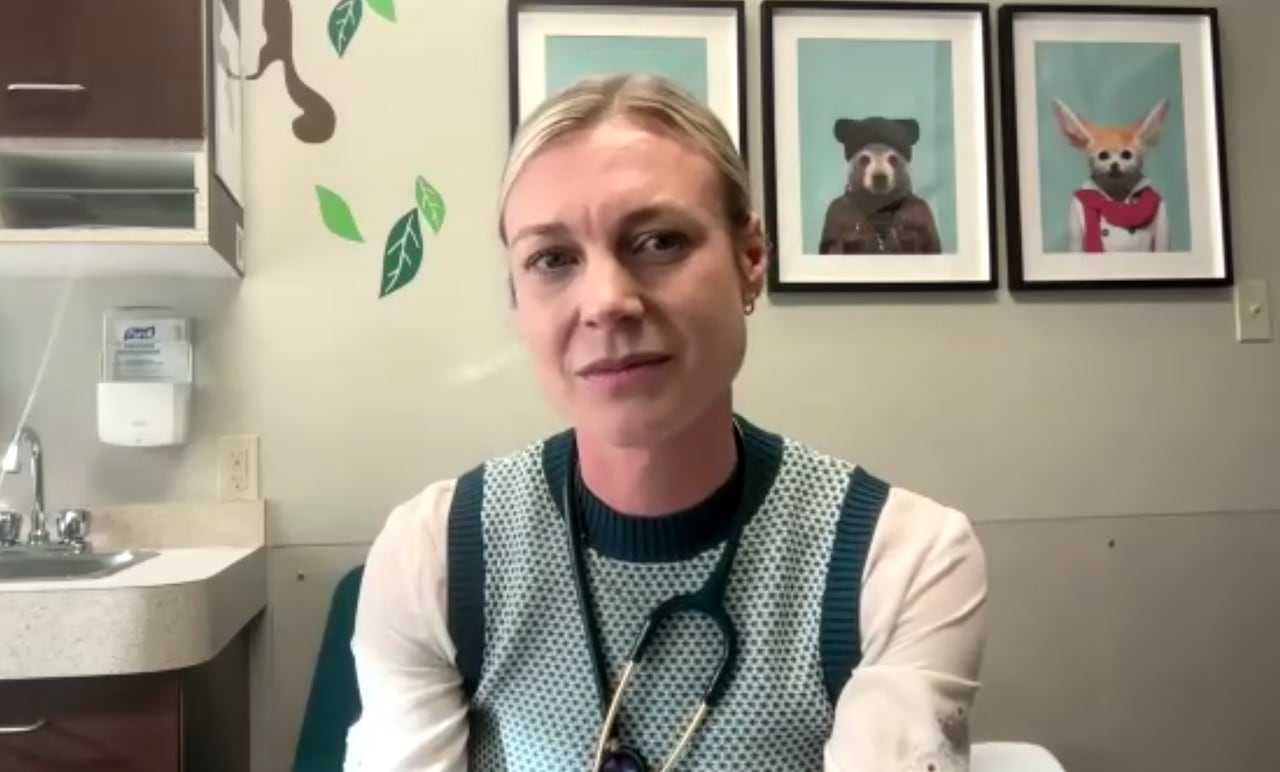
Dr. Carrah Bouma is a pediatrician who works at Peter Lougheed Centre, Alberta Children’s Hospital and in a community-based practice. (CBC News)
The Canadian Paediatric Society advises opting for the injection over the drops, which must be administered over several weeks. It cautions that parents should be made aware that the drops are less effective, leaving babies still at risk of bleeding, including in the brain.
Bouma noted that a lack of trust appears to be at the core of some of the hesitance she is witnessing.
“Its safety profile is outstanding. There are virtually no disadvantages to administering vitamin K and very few side effects aside from those associated with the injection,” she stated, adding that those side effects can include mild pain and bruising at the injection site.
U.S. organization notes increased vitamin K refusal
The American Academy of Pediatrics, another prominent medical organization, has highlighted a rise in parental resistance.
“In recent years, there has been a noticeable increase in parents refusing [vitamin K injections] for their newborns, resulting in an uptick in cases of late-onset VKDB,” the organization stated in a policy document from 2022.
“Since VKDB is still relatively uncommon, many families are unaware of its serious implications and need to be educated about the risks of refusal.”
Data available to the public indicates that the uptake of vitamin K for newborns in Alberta rose to 95.71 percent in 2023, up from 92.76 percent in 2007.
CBC News reached out to Alberta Health Services and the provincial government for more current statistics, but neither provided a response.
The older statistics reflect a decline in uptake in the southern zone (dropping to 94.05 percent in 2023 from 97.3 percent in 2007). The northern zone remained relatively stable with rates of 93.9 percent in 2023 and 94.04 percent in 2007. Other zones showed overall increases.
Over a decade ago, the province identified a similar concern, pointing out clusters of higher refusal rates in Grand Prairie County in the north zone, as well as in the Cochrane and Springbank areas in the Calgary zone, and Red Deer County in the central zone.
At that time, recommendations were made to enhance parent education regarding the health risks associated with declining vitamin K.