
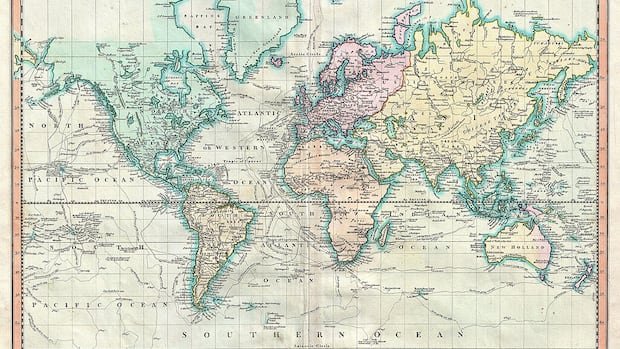

The United Nations decided to move away from the traditional Mercator global map in favor of a more accurate representation of countries’ true sizes. This resolution, initiated by African nations, aims to address the misconception that Africa is on the fringes of the world.
Togo spearheaded the effort to support the African Union’s campaign against the Mercator map, known for distorting the size of land masses by exaggerating those closer to the poles. Notably, it falsely portrays Greenland as comparable in size to Africa, despite Africa being significantly larger.
“A fair world starts with an accurate map,” remarked Togo’s Foreign Minister Robert Dussey ahead of the vote. The resolution endorses the Equal Earth projection, which provides a more precise depiction of continent sizes.
The resolution, passed by a vote of 164 to one at the UN General Assembly, with six abstentions, was met with resistance from the United States, the sole dissenting country. The U.S. argued that the resolution pushes an ideological agenda and diverts attention from more pressing global issues.
Togo aims to update its school curriculum by the end of the year to reflect the Equal Earth projection, becoming the first country to do so. Dussey emphasized the importance of setting an example for other nations in embracing accurate cartography.
Furthermore, Togo intends to advocate for the adoption of the Equal Earth projection among governments, educational institutions, international bodies, and technology firms. Dussey emphasized that this shift aligns with efforts to rectify colonial-era legacies in Africa without targeting any specific regions or civilizations.
In the coming months, Togo plans to collaborate with African Union members and global allies to promote wider acceptance of the Equal Earth projection. Dussey highlighted the necessity of engaging mapping, GPS, and location-based technology companies in discussions on implementing the new map.
By challenging the prevailing use of the Mercator map, Togo seeks to contribute to a more accurate and inclusive portrayal of the world, recognizing the evolving nature of Africa and global perceptions.