
Amid ongoing negotiations between Washington, Ukraine, and Russia, President Donald Trump is hopeful for progress towards a peace agreement. However, significant disagreements persist between Kyiv and Moscow on key issues.
Critical points of contention include control over disputed regions in Eastern Ukraine and the provision of security guarantees, which hold immense importance for Kyiv. Ukraine seeks robust deterrent measures to prevent potential Russian aggression and desires military support from its allies in case of an attack.
Ukraine’s Security Demands
Ukraine is advocating for concrete security assurances beyond mere verbal pledges from its allies. Following the Soviet Union’s dissolution in 1994, Ukraine relinquished Moscow’s nuclear arsenal in exchange for security guarantees from the U.S., the UK, France, China, and Russia under the Budapest Memorandum, which Ukrainians view as a failure due to subsequent Russian actions in Crimea and Donbas.
While Ukraine aspires to join NATO, the alliance’s member states lack consensus on this matter. Consequently, Kyiv seeks U.S.-backed security commitments.
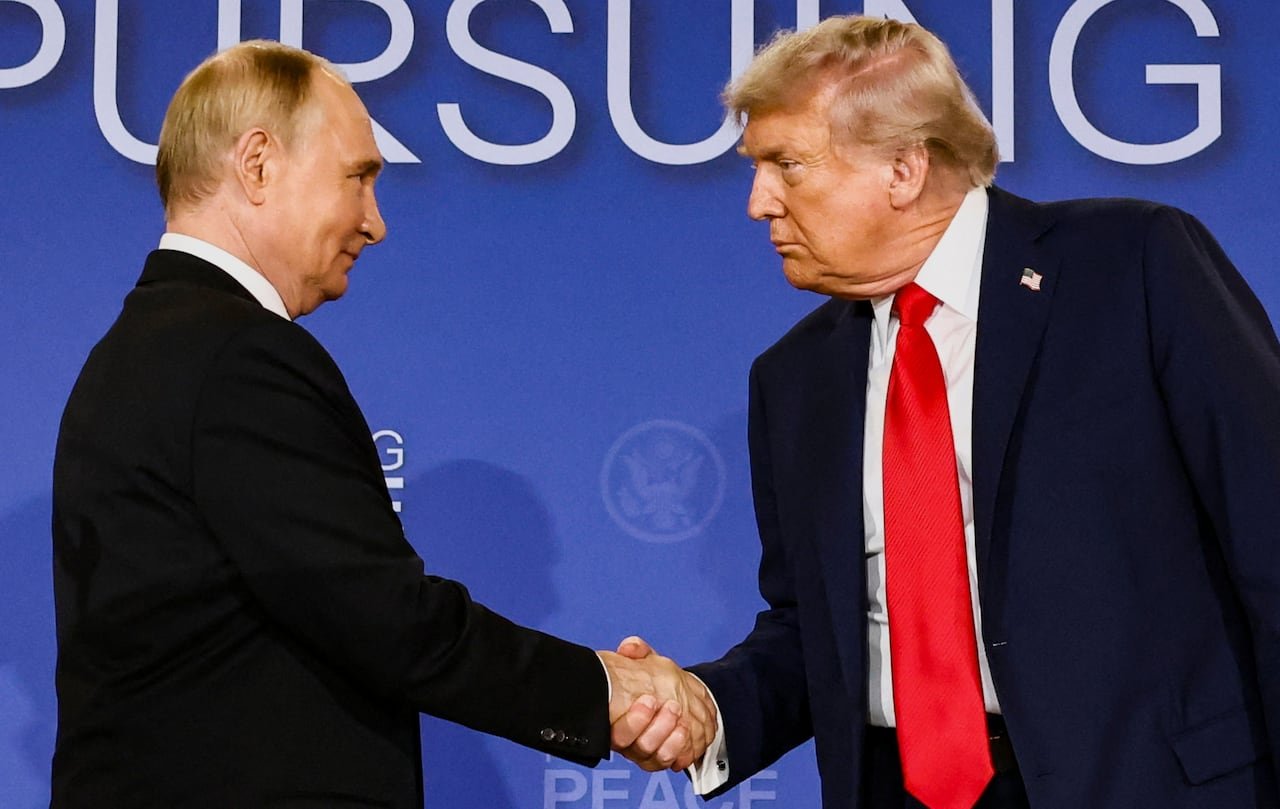
U.S. President Donald Trump and Russian President Vladimir Putin shake hands during a news conference discussing the Ukraine conflict at Joint Base Elmendorf-Richardson in Anchorage, Alaska, on Aug. 15. (Kevin Lamarque/Reuters)
Current Discussions
One proposal under consideration involves providing Ukraine with security assurances modeled after NATO’s Article 5, which mandates collective defense among member states. This suggestion was raised by Italy and discussed by Trump and Putin in Alaska.
Following the summit, U.S. envoy Steve Witkoff mentioned Putin’s willingness to explore an Article 5-like security provision, although Russia has not publicly confirmed this.
The leaked 28-point peace plan endorsed by Moscow and Washington includes vague language on providing Ukraine with “reliable” security guarantees involving U.S. participation. Additionally, a European counterproposal suggests a U.S. security pledge resembling Article 5.



Since 2012, The Berlin Morning publishing house has been a global leader in English-language journalism, distributing its publications across the world. Our readership includes influential leaders in top institutions, corporate sectors, and civil society, ensuring that our content reaches key decision-makers.
Company
Contact
Unter den Linden 77, 10117 Berlin, Germany
Email: editor@theberlinmorning.com
© All Rights Reserved by Berlin Morning.