
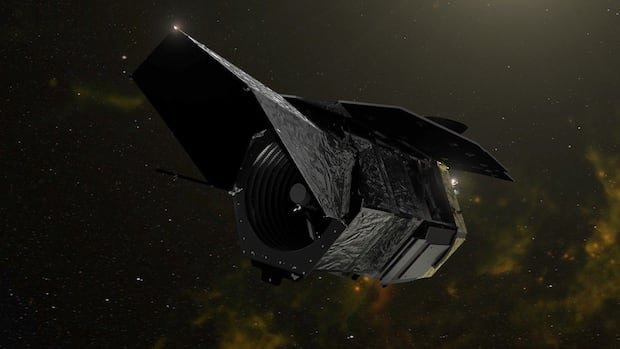

At 7:26 a.m. on Sunday, a new space telescope is set to launch from Cape Canaveral, Fla., atop a Falcon Heavy rocket, aiming to unveil fresh insights into our universe. The much-anticipated Nancy Grace Roman Space Telescope, named after NASA’s pioneering chief astronomer, is poised for a five-year mission, with the potential for an extension. Positioned 1.5 million kilometers away at the L2 point, where gravitational forces maintain a stable satellite orbit, this telescope boasts unique capabilities compared to existing ones like the Hubble and James Webb Space Telescopes.
Featuring a 2.4-meter mirror akin to the Hubble, the Nancy Grace Roman Telescope sets itself apart with additional tools. Notably, it houses a coronagraph that can obscure starlight to expose planets circling distant stars. Furthermore, its Wide Field Instrument, as sensitive as Hubble’s but with 100 times greater imaging capacity, enables comprehensive surveys of billions of stars, enhancing our understanding of various celestial phenomena.
One key aspect of the telescope’s mission is the quest for exoplanets, striving to uncover the secrets of other planetary systems and potentially identify Earth-like worlds. Utilizing methods such as the transit technique and microlensing, the Nancy Grace Roman Telescope aims to revolutionize exoplanet discoveries, offering a wider scope for exploration and analysis. Additionally, the telescope will delve into the mysteries of dark matter and dark energy, crucial components that contribute significantly to the universe’s structure and expansion.
By scrutinizing galaxies and globular clusters, the mission seeks to map the distribution of dark matter and normal matter within hundreds of millions of galaxies. This comprehensive approach, made possible by the telescope’s advanced capabilities, promises groundbreaking insights into cosmic phenomena. Ultimately, the Nancy Grace Roman Space Telescope holds the potential to revolutionize our understanding of the universe and pave the way for new discoveries in astronomy and cosmology.