
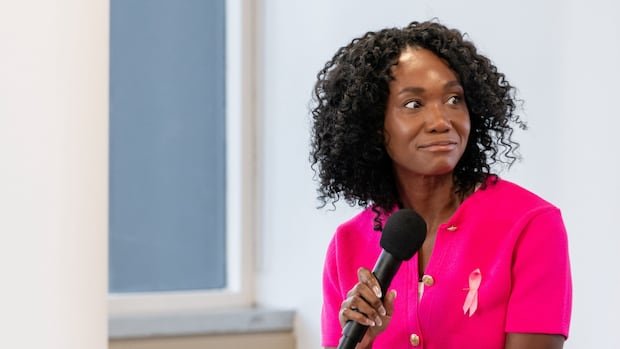

Toronto resident Elysia Bryan discovered a lump in her right breast in the summer of 2020 but delayed seeking medical attention, hoping it would vanish. Despite being healthy and active at 34, Bryan didn’t schedule a screening for breast cancer immediately. She described the lump as visible and painful, but she chose to ignore it, believing it might disappear on its own.
After months of neglect, Bryan eventually consulted her family doctor in April 2021, who advised her to undergo a mammogram and biopsy. Following the biopsy, she received a breast cancer diagnosis at St. Michael’s Hospital and underwent a lumpectomy within two weeks. Subsequently, Bryan successfully completed eight rounds of chemotherapy, 24 radiation sessions, genetic testing, mastectomy, and reconstruction, emerging cancer-free. She now advocates for early breast cancer screening, emphasizing the importance of timely detection for effective treatment outcomes.
Working alongside The Olive Branch of Hope, an organization supporting Black women with breast cancer, Bryan noted an increasing number of young women being diagnosed with the disease. Stressing the significance of proactive health measures, she urged young women to prioritize regular screenings available to them.
A recent study by the Hologic Global Women’s Health Index highlighted low screening rates for breast and cervical cancers among women in Canada and the U.S. Only 15% of Canadian women and 25% of American women reported undergoing screenings in the past year. The study, conducted by Hologic in collaboration with Gallup, revealed that women from lower-income backgrounds, ethnic minorities, and newcomer communities were less likely to receive screenings.
Ontario’s decision to lower the self-referral age for mammograms by ten years a year ago aimed to improve early detection and access to treatment for breast cancer. Despite the positive impact expected from this change, only around 21% of eligible women aged 40 to 49 in Ontario have undergone screening since its implementation. Health Minister Sylvia Jones emphasized the importance of early detection in saving lives.
Dr. Supriya Kulkarni, a breast imaging radiologist at the University Health Network, expressed concerns about certain communities being underserved in breast cancer screenings. She stressed the necessity of reaching out to immigrant populations, refugees, individuals facing language barriers, and First Nations communities to ensure equitable access to screening services.
Efforts to promote screening among marginalized groups are crucial, according to Dr. Ritika Goel, a family doctor in Toronto. She highlighted disparities in health access and outcomes for racialized and immigrant women, emphasizing the need to address broader social and structural determinants of health.
Ontario Health has taken steps to enhance breast cancer screening awareness by creating multilingual materials and organizing webinars. Preventive care programs have been established to engage prevention specialists in conducting culturally responsive breast screening conversations with over 7,000 individuals from racialized and underserved communities.
With advancements in screening technologies making the process more convenient and comfortable, the goal is to expand outreach and save more lives through early detection and intervention.