
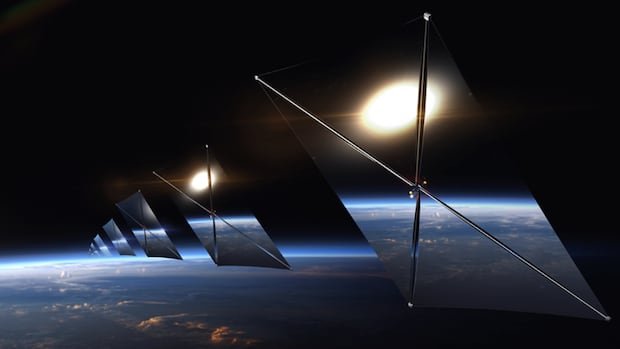

Despite facing opposition from numerous public comments, the U.S. Federal Communications Commission (FCC) has approved a project by Reflect Orbital to deploy a large space mirror that would reflect sunlight back to Earth. The company promotes this initiative as a way to provide “sunlight on demand” for various purposes such as agriculture and search and rescue operations.
However, concerns have been raised by astronomers and advocacy groups regarding the potential negative impacts of the project. These concerns include threats to species relying on a dark night sky, interference with astronomical research, and risks of eye damage to individuals using telescopes.
While the FCC has approved the deployment of one satellite for this purpose, Reflect Orbital plans to launch over 50,000 satellites by 2035. This adds to the growing number of satellites being proposed by companies like SpaceX and Blue Origin, raising concerns about the increasing congestion in Earth’s orbit.
Regulation of activities in outer space falls under the purview of the United Nations Office for Outer Space Affairs (UNOOSA), which oversees international agreements related to space exploration and applications. The 1967 Outer Space Treaty, signed by over 115 countries, emphasizes the peaceful use of outer space and requires consideration of the interests of all states parties.
Experts suggest that while there are no prohibitions on placing reflective objects in orbit, such activities are subject to international consultation and obligations to other states. National regulations and agreements may also come into play to address concerns related to environmental impacts and light pollution caused by space-based activities.
Reflect Orbital claims to work closely with organizations like the International Astronomical Union on mitigating the potential effects of their satellite deployments on astronomical observations. However, ongoing dialogue and collaboration with the scientific community are essential to address the challenges posed by the increasing presence of satellites in space.