
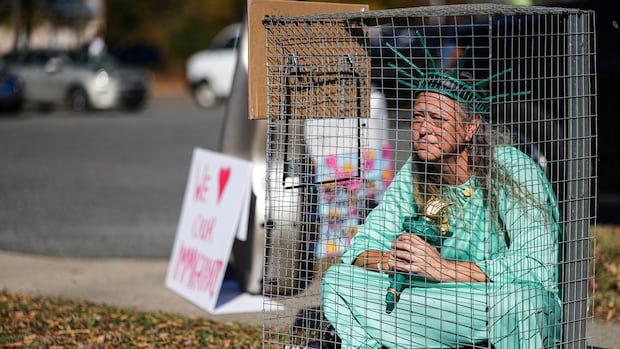

Federal immigration authorities are considering expanding their enforcement activities to another city in North Carolina, following a shift away from operations in other U.S. cities sanctioned by the Trump administration. Raleigh Mayor Janet Cowell indicated that Customs and Border Protection might be targeting Raleigh. She urged residents to uphold peaceful values amid potential challenges.
Previously, the Trump administration had designated Charlotte as a focal point for an immigration crackdown to combat crime, despite opposition and decreasing crime rates in the city. Recent reports from Homeland Security Assistant Secretary Tricia McLaughlin stated that border patrol officers in Charlotte had apprehended over 130 illegal immigrants, citing offenses such as gang affiliation, aggravated assault, and shoplifting, without specifying the outcomes of these cases.
The intensification of immigration enforcement in North Carolina aligns with the administration’s broader crackdown in various cities, involving the deployment of National Guard troops and, notably, Marines in Los Angeles. This strategy, a contentious aspect of Trump’s second term, underscores a heightened willingness to enlist the military for domestic objectives, leading to tensions between states with differing political leadership.
Despite claims of surging crime rates, violent offenses have actually declined in recent years alongside the waning impact of the COVID-19 pandemic. Notably, National Guard members lack arrest powers under the current framework but are primarily assigned to safeguard federal facilities, particularly those overseen by U.S. Immigration and Customs Enforcement, as part of the administration’s deportation agenda.
Critics have questioned the rationale behind these enforcement actions. Data from the Migration Policy Institute suggests a decrease in the percentage of ICE detainees with criminal convictions under the Trump administration compared to its Democratic predecessor. Former ICE chief of staff Jason Houser criticized the administration for targeting a broader demographic beyond violent offenders, including working individuals and asylum-seekers.
The Department of Homeland Security has cited North Carolina’s sanctuary policies as a primary reason for focusing on the state. Despite a predominantly Republican-led legislature, the Democratic governor and mayors of Charlotte and Raleigh stand in opposition to the administration’s approach. Legal challenges and resistance from Democratic officials in cities like Chicago further complicate the deployment of military forces, with arguments centered on the violation of state sovereignty.
In response to these developments, a judge in Tennessee temporarily blocked the deployment of National Guard troops in Memphis, emphasizing the need for a thorough legal review. President Trump’s deployment of troops without adequate consultation with state leaders has sparked criticism and legal disputes across various jurisdictions.
Overall, the enforcement actions in North Carolina and other cities underscore the ongoing debate surrounding immigration policies, federal-state relations, and the role of the military in domestic affairs. The complex interplay between federal directives, legal challenges, and political dynamics continues to shape the landscape of immigration enforcement across the United States.