
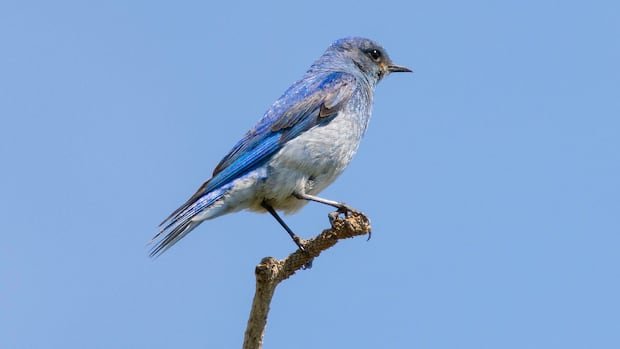

Mountain bluebirds, despite their name, can be spotted throughout the Canadian Prairies. Recognized for their vibrant blue feathers, they are a common sight in Alberta. However, the decline in their population over the years has raised concerns.
As per The State of Canada’s Birds report by Birds Canada and Environment and Climate Change Canada, mountain bluebird numbers in the country have fallen by 60% since 1970. Canada hosts approximately 650,000 mountain bluebirds, representing only 12% of the species’ North American population, marking the lowest recorded abundance.
Based on data from citizen science efforts and professional research, the population of mountain bluebirds in the Canadian Prairies surged from the early 1980s to the mid-1990s but has since seen a significant decline. Factors contributing to this decline may include climate change, habitat loss, and a decrease in insect populations – the primary food source for these birds, possibly due to pesticide and herbicide use.
Jody Allair from Birds Canada noted that the consistent decline in mountain bluebird numbers, especially since the early 2000s, is alarming. In response to this decline, the Badlands Trail Society in Alberta has initiated conservation efforts for mountain bluebirds by installing 48 nest boxes across the Drumheller Valley and its surroundings.
Cheryl Taylor, a co-founder of the Badlands Trail Society, highlighted that these nest boxes aim to provide assistance to the bluebirds in the region. The project, established with support from fellow member Claude Rioux, operates on Nature Conservancy of Canada land west of Drumheller, offering an ideal habitat for bluebirds with ample food resources and minimal human disturbance.
Apart from aiding bluebirds in nesting where natural cavities are scarce, the group also focuses on raising awareness about the importance of protecting bird habitats. Taylor emphasized that by familiarizing people with birds, there is a greater likelihood of safeguarding the environments necessary for their survival, as birds serve as indicators of ecosystem health.
The Badlands initiative is part of various bluebird nest box projects across Western Canada, reflecting a growing public interest in bluebird conservation. Allair emphasized the value of engaging individuals in conservation efforts, highlighting the potential for increased awareness leading to broader environmental protection initiatives.
While the mountain bluebird’s population decline is not as severe as some other bird species, its iconic status makes it an ideal ambassador for Canadian bird conservation education. Allair stressed the beauty and allure of mountain bluebirds, urging people to support bird conservation through various actions such as keeping cats indoors, mitigating window collisions, and preserving insect populations by avoiding pesticides and herbicides.