
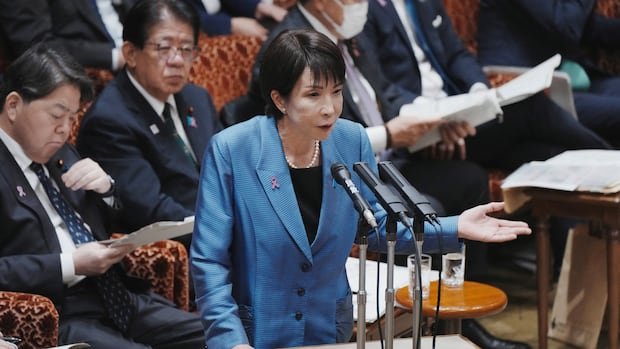

Japan has issued a warning to its citizens in China to increase safety measures and steer clear of crowded areas amidst escalating tensions between the two largest economies in Asia regarding Japanese Prime Minister Sanae Takaichi’s statements on Taiwan.
The conflict arose when Takaichi stated in a session with Japanese lawmakers that a Chinese attack on Taiwan, posing a threat to Japan’s survival, could prompt a military reaction, sparking the most severe diplomatic clash in recent years.
The disagreement could negatively impact Japan’s economy as Beijing has advised its citizens against traveling to Japan. Chinese tourists make up nearly a quarter of all visitors to Japan, as per official statistics, leading to a sharp decline in tourism-related stocks in Japan.
Over 10 Chinese airlines, including Air China, China Eastern Airlines, and China Southern Airlines, have offered refunds for flights to Japan until December 31. Additionally, Sichuan Airlines has put on hold its Chengdu-Sapporo route until at least March, as reported by state media.
Despite efforts by a senior Japanese official to ease tensions during a meeting with Chinese counterparts in Beijing, a resolution seemed distant. Takaichi’s comments were more forthright than those of her predecessors, who had expressed concerns about China’s threats to Taiwan without detailing Japan’s potential response.
China claims Taiwan as its territory and has not ruled out using force to gain control, while Taiwan’s government rejects these claims. In response to Takaichi’s remarks, China’s Foreign Ministry urged her to retract the statements, but Japan’s top government spokesperson indicated that Tokyo had no intention of doing so, emphasizing a peaceful resolution through dialogue.
Amid escalating rhetoric, the Chinese state media criticized Takaichi, with a Chinese diplomat in Japan posting a threatening comment about her on social media. The Japanese embassy in China advised its citizens to be vigilant, respect local customs, and exercise caution in interactions with locals.
The diplomatic fallout has also impacted trade and cultural exchanges, with film distributors suspending the screening of Japanese movies in China. This decision was lauded by the state broadcaster CCTV as a reflection of deteriorating domestic sentiment. Additionally, the screening of upcoming Japanese films in mainland China has been delayed due to the strained relations.
Apart from the tourism sector, Japan’s reliance on China for critical minerals used in various industries poses a risk, according to Japan’s economic security minister. The minister highlighted the dangers of economic dependence on a country resorting to economic coercion, referencing China’s recent calls for its citizens to avoid traveling to Japan.
Meanwhile, Japanese Trade Minister Ryosei Akazawa noted no significant changes in China’s export control measures on rare earths and other materials. Business federations in Japan have urged dialogue to resolve the diplomatic tensions, especially given the strategic importance of Taiwan for Japan’s trade routes.
The proximity of Taiwan to Japanese territory, hosting the largest U.S. military contingent overseas, underscores the significance of the region’s stability. Recent incidents, such as Chinese coast guard ships sailing near disputed islands controlled by Japan, have heightened tensions. The U.S. ambassador to Japan reiterated the commitment to defend Japan, including the disputed islands, under the Japan-U.S. security treaty.
In response to the U.S. ambassador’s remarks, the Chinese Foreign Ministry spokesperson dismissed them as a “political show with ulterior motives.” The ongoing tensions between China and Japan highlight the complex geopolitical dynamics in the region.