
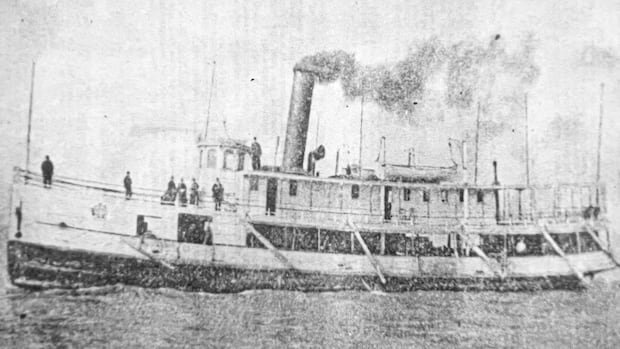

A team of enthusiasts in marine archaeology will explore a beach in southwestern Ontario this summer to investigate a tragic shipwreck from over a century ago. The SS Erie Belle, a steam tug, suffered a violent explosion in 1883 on Lake Huron near Kincardine, resulting in the immediate deaths of four crew members and two more succumbing to injuries in the following weeks.
While it is known that a malfunctioning boiler caused the shipwreck, conservation and wildlife biologist David Galbraith is leading an underwater survey to uncover more details about the incident. Galbraith, who has a personal connection to the area, shared that the idea to document the wreckage came from conversations with friends.
With the approval of a marine archaeology license from the province, Galbraith and his team will commence the survey without disturbing any artifacts. They aim to document the site through measurements, recordings, and photographs, adhering to regulations under the Ontario Heritage Act that prohibit unauthorized alteration or retrieval of artifacts from known marine archaeological sites.
Galbraith, a member of the Ontario Marine Heritage Committee, plans to spend significant time at Boiler Beach conducting the survey. His colleague Scarlett Janusus, also part of the OMHC, emphasized the importance of exploring marine heritage to fill gaps in historical records and understand events like the SS Erie Belle explosion better.
Acknowledging the limited knowledge about the steamship’s history, Janusus expressed support for Galbraith’s initiative, highlighting the necessity for increased marine archaeology efforts in the province. Galbraith anticipates an ongoing learning process beyond the current fieldwork, emphasizing the continual curiosity and questioning inherent in scientific exploration.