
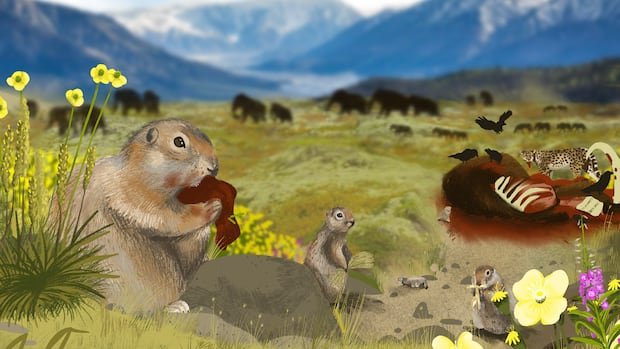

A recent study published in Nature Communications reveals that scientists have successfully reconstructed the genomes of various ancient Arctic animals, including woolly mammoths, horses, steppe bison, and ground squirrels. By analyzing DNA extracted from frozen squirrel feces found in the Yukon, researchers were able to piece together the genetic makeup of these prehistoric creatures.
The fossilized feces, known as coprolites, contained DNA from a wide range of animals such as wolves, predatory cats, mammoths, horses, birds, bats, grasshoppers, and parasitic worms, as well as over 200 plant species. Tyler Murchie, a scientist at the Hakai Institute and the lead author of the study, emphasized the significance of capturing the entire ecosystem from megafauna to microorganisms through this DNA analysis.
Ground squirrels in the Arctic have been unintentional archivists for hundreds of thousands of years, storing a diverse array of plant and animal fragments in their burrows. These ancient burrows, including toilet chambers filled with preserved feces, have provided valuable insights into the diet and environment of these squirrels dating back 30,000 to 700,000 years.
The study also highlighted the surprising discovery that the DNA extracted from the coprolites was better preserved and concentrated than DNA from bones and sediments previously studied. Researchers identified a distinct population or species of Arctic ground squirrel in the Yukon based on the DNA analysis, with some samples dating back 700,000 years originating from a species found in Asia.
Furthermore, the analysis of ancient DNA revealed the stability of plant and animal species on the dry mammoth steppe grasslands in eastern Beringia over 700,000 years during the Pleistocene epoch. This ecosystem was vastly different from the current boreal forest ecosystem in the region, as evidenced by DNA comparisons with a coprolite from a snowshoe hare of the Holocene epoch.
As climate change accelerates, the preservation of these ancient archives is under threat, with some sites thawing rapidly and eroding into rivers. Researchers warn that time is running out to study and protect these invaluable records of past ecosystems and climate change. The study was made possible through funding from various organizations, including the Tula Foundation, CANA Foundation, and the Natural Sciences and Engineering Research Council.