
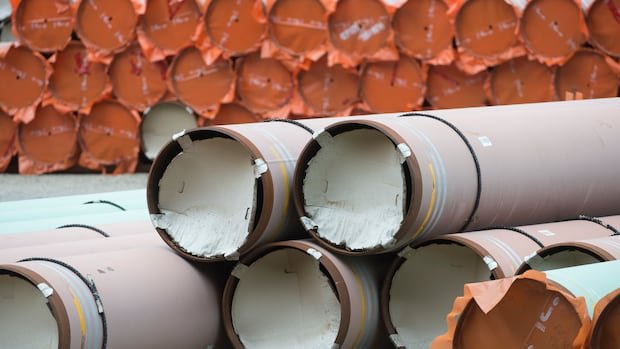

The Alberta government is set to reveal specifics on Thursday about its plan to construct a new oil pipeline extending to the West Coast. Initially, Alberta had until July 1 to submit its proposal to the federal government’s Major Projects Office as per a memorandum of understanding signed in the fall between Ottawa and the province. However, the announcement was delayed by a day due to the Canada Day holiday, coinciding with Prime Minister Mark Carney’s visit to Edmonton, which was later canceled because of thunderstorms in Ottawa.
Political science professor Ryan McKinnell from MacEwan University in Edmonton believes the forthcoming announcement signifies a collaborative effort between the province and Ottawa to repair their relationship. He views the pipeline as a symbol of Alberta’s position in the country. The Alberta government aims to enhance Canada’s energy independence and global competitiveness through the pipeline construction.
As the province prepares for a fall referendum on constitutional, immigration, and separation issues, McKinnell doubts that the joint pipeline initiative will fully address the rising frustration among Alberta separatists. Prime Minister Carney has linked Ottawa’s support for the pipeline to the Pathways carbon capture and storage project to offset emissions from increased oil production.
The agreement between Ottawa and Alberta stipulates that the pipeline must be privately built and funded, but no private proponent has been identified yet. The proposal has faced opposition from B.C. Premier David Eby, who feels his province is disadvantaged in the deal. Eby is concerned about being excluded from pipeline discussions and the potential lifting of the federal oil tanker ban on B.C.’s north coast.
Jesse Cardinal, a member of the Kikino Metis Settlement and executive director of Keepers of the Water, highlights concerns about the environmental impacts of the proposed project. She criticizes the lack of consideration for issues like fresh water use, toxic tailings cleanup costs, and health impacts. Cardinal points to incidents of tailings entering the Athabasca River and the environmental and health risks they pose, as noted by the Athabasca Chipewyan First Nation.
Cardinal also criticizes the Alberta government’s consultation process with Indigenous groups regarding the pipeline proposal, alleging a repeated failure in engaging with Indigenous communities. The province, on its website, claims to prioritize early, respectful, and meaningful engagement with Indigenous communities throughout the project stages.
The Alberta government aims to have the project declared in the national interest by the federal government by October.