
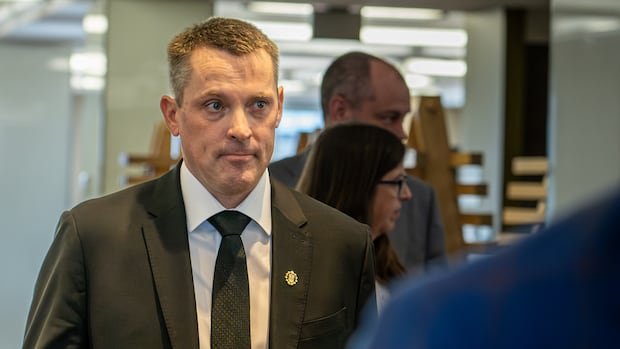

Alberta’s finance minister has stated that the province may consider implementing back-to-work laws if teachers remain on strike when the legislative session resumes later this month. Nate Horner highlighted a significant gap between the demands of the striking teachers’ union and the government’s budget allocation. The ongoing provincewide strike has impacted approximately 750,000 students in 2,500 schools, now in its seventh day.
During a recent bargaining session, the Alberta Teachers’ Association presented a new contract proposal, marking the first meeting since the walkout of its 51,000 members on October 6. Horner, in an interview with Corus Radio host Shaye Ganam, described the union’s latest proposal as ambitious, requiring nearly $2 billion more in funding than what the government had initially set aside for negotiations.
The minister indicated that the government might introduce back-to-work legislation later this month if the strike persists. Horner emphasized the urgency of resolving the situation promptly to ensure students return to school. The government’s proposed contract spending limit stands at $2.6 billion over a four-year period.
The union’s proposal focuses on increased salary increments compared to the government’s previous offer, along with addressing classroom concerns such as class size limits. Union president Jason Schilling defended the proposal, emphasizing that it reflects the teachers’ genuine needs and concerns.
The government’s prior offer included a 12% salary increase over four years and a commitment to hiring 3,000 additional educators to manage overcrowded classrooms. Horner reiterated the government’s stance on salaries, stating that their previous offer was fair and aligned with agreements signed with other public sector unions.
The union is yet to respond to the minister’s remarks, indicating that no further meeting dates have been arranged, and both sides are exploring their options. Horner expressed the government’s readiness to resume negotiations this week, urging the union to engage in productive discussions grounded in practical solutions.
Schilling defended the union’s position, asserting that they are addressing the reality of classroom challenges across the province. He criticized the government’s failure to adequately support students, parents, and the education system in Alberta.