
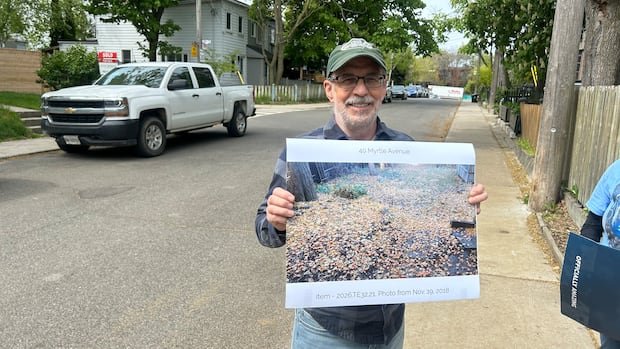

An exotic tree species that has become more prevalent in Toronto is causing issues for residents in the area. Alan Page, a long-time resident of Leslieville, has been dealing with the inconvenience of his backyard ginkgo tree producing sticky and foul-smelling fruit during the autumn season. The residue from the fruit is difficult to remove and attracts flying insects like bees and wasps, creating a nuisance for homeowners like Page.
Although the ginkgo trees are healthy, residents have expressed concerns about the strong odor emanating from the female ginkgo trees’ fruit, likened to a blend of dog feces and vomit. Despite Page’s application to have the tree removed being rejected by city forestry staff, he is currently appealing the decision, which is set to be heard by the Toronto and East York Community Council.
Coun. Josh Matlow has raised awareness of the challenges faced by homeowners dealing with the ginkgo trees and their unpleasant fruit. The city is home to thousands of ginkgo trees, which were introduced from China decades ago. The female ginkgo trees are now maturing, leading to the recent issue of the malodorous fruit causing distress to residents.
Currently, homeowners require city permits to remove trees with a diameter of 30 cm or more, including those on private property, with potential fines for violations. The stringent regulations aim to increase the city’s tree canopy to 40% coverage by 2050, as part of ongoing efforts to enhance the urban environment. Matlow is advocating for more flexible rules regarding ginkgo tree removal to address immediate concerns while staff work on long-term solutions.
Neighbors like James Chiu, who supports Page’s appeal, have also experienced the repercussions of the ginkgo fruit, affecting their living environment. If granted permission to remove the tree, Page has committed to planting five new trees in its place. Arborists emphasize the benefits of ginkgo trees, such as providing shade and wildlife habitat, while encouraging residents to adapt to the seasonal challenges posed by the trees instead of eradicating them entirely.