
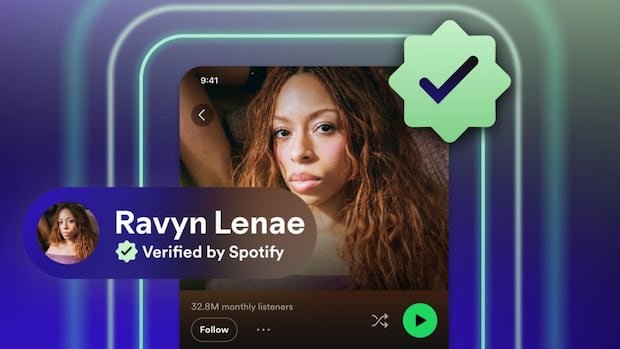

The latest lineup on Spotify’s “New Music Friday” now features a fresh addition: the “Verified by Spotify” badge. This new feature aims to differentiate between human artists and AI-generated music that has gained popularity on the platform.
Spotify introduced the green badge with a check mark to signify genuine and trusted artists, distinct from AI-created or AI-persona accounts. To receive this verification, artists must meet specific criteria, such as maintaining consistent listener engagement over time and having a recognizable presence both on and off the platform, including linked social media accounts, live performance schedules, and merchandise sales.
According to Spotify, artists need to have at least 10,000 active listeners for three consecutive months to qualify for verification. The company also considers artists who have made significant contributions to music culture and history or are currently building cultural relevance.
Andrew Cash, the president and CEO of the Canadian Independent Music Association (CIMA), expressed that the implementation of a verification system was inevitable to distinguish between human and AI-generated music, fulfilling a desire shared by artists and fans. However, he raised concerns that Spotify’s criteria might pose challenges for new and independent artists aspiring to reach wider audiences.
Notable artists like Madonna, BTS, and Bad Bunny, along with Canadian talents such as The Beaches, Cameron Whitcomb, and Jeremy Dutcher, have already received the coveted green badge. However, artists like Joni Mitchell and bbno$, despite having significant followings, are yet to be verified.
Spotify plans to roll out the verification badges gradually over the coming weeks on a continuous basis. While the badges currently do not appear on popular podcasts like “The Joe Rogan Experience” and “Smartless,” Spotify clarified that they do not intend to extend the verification to podcasts at this time, despite the influx of AI-generated content in that domain.
In a bid to safeguard the authenticity of real individuals, various online platforms, including social media giants like Twitter and Meta’s Instagram and Facebook, have implemented verification systems. While some platforms allow users to purchase verification, Spotify has stated that they have no plans to monetize their verification badges.
As Spotify’s verification process evolves, it remains focused on ensuring that AI-generated work is not eligible for verification. In contrast, other platforms like Apple Music and Deezer have introduced features to alert users to AI-generated content or provide options to filter out such music from their feeds.
Artists like Taylor Swift have taken legal measures to protect their music and image from misuse through artificial intelligence. The evolving landscape of AI-generated content underscores the importance of artists leveraging technology to enhance their creative endeavors.