
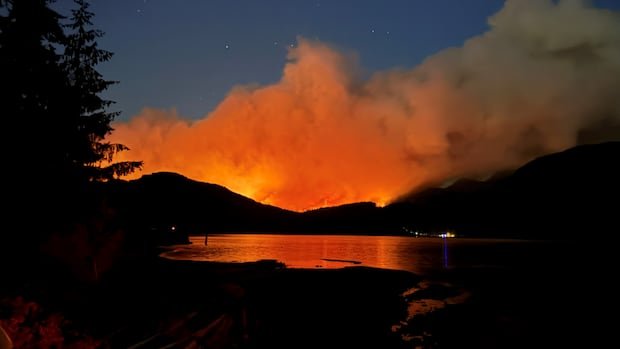

Experts anticipate that the upcoming wildfire season in Canada may start quietly, but the persistent drought conditions and a warm summer could lead to another severe year.
Wildfire specialist Mike Flannigan views this year as a crucial test to determine if Canada’s wildfire seasons, already impacted by human-induced climate change, have transitioned into a new norm.
Flannigan, a wildland fire professor at Thompson Rivers University in Kamloops, B.C., noted a shift in his outlook from expecting alternating quiet and bad fire years to considering that most years on a national scale could now be challenging.
While it’s difficult to predict the exact outcome of Canada’s wildfire season in April due to factors like fire ignitions and rapidly changing weather conditions, experts can assess general wildfire risks based on certain indicators. Flannigan expressed some concerns leading into this season.
What Canadian Regions Face Wildfire Risks?
Parts of Canada, particularly British Columbia’s southern Interior, northern Manitoba, and eastern Northwest Territories, emerged from winter experiencing abnormally dry or drought conditions, posing heightened wildfire risks.
Long-term forecasts suggest above-average temperatures across much of Canada in the upcoming months, with the onset of El Niño, a climate pattern linked to Pacific Ocean temperature changes, expected to impact the summer.
Despite some regions being in better condition compared to previous severe wildfire years, areas like southern B.C., southern Alberta, and southwestern Saskatchewan are already showing conducive conditions for wildfires. Concerns also extend to New Brunswick, Hudson Bay, and eastern Northwest Territories due to below-normal snowfall and potential warm conditions ahead.
Factors Contributing to Consecutive Severe Fire Seasons
Canada enters this wildfire season following three consecutive severe fire years, with 2025 ranking as the second-worst after the extensive wildfires in 2023.
Scientists attribute the increasing severity and duration of wildfire seasons to accelerating climate change, primarily fueled by fossil fuel combustion. The warming climate leads to drier vegetation, creating ideal conditions for wildfires, along with more frequent and intense heat waves and droughts.
Recent data indicates that Canada’s managed forests are now emitting more carbon than they absorb, reinforcing a troubling climate feedback loop. Notably, the 2023 wildfires released substantial greenhouse gas emissions, ranking alongside major global emitters like China, India, and the United States.
Additionally, extreme wildfire behavior, including fire-generated thunderstorms, is becoming more prevalent, underscoring the growing challenges posed by wildfires.
Mitigating Wildfire Risks and Impacts
Wildfires not only displace thousands of Canadians annually but also pose significant health risks from smoke exposure. Studies suggest that smoke from wildfires could lead to hundreds of premature deaths and substantial economic costs related to healthcare and reduced productivity.
To reduce the risk of wildfires, individuals are urged to remain cautious when outdoors, especially in fire-prone regions. Simple measures like properly extinguishing campfires and being aware of potential fuel sources can help mitigate wildfire risks during the spring season.