
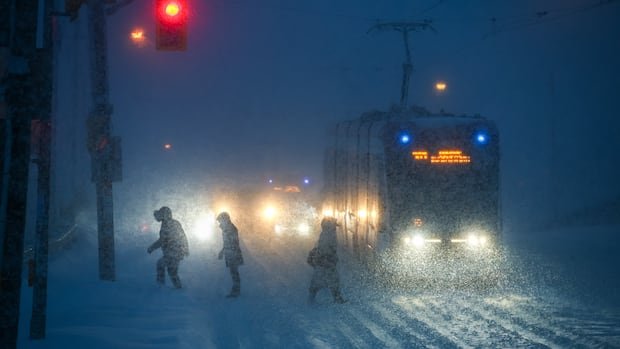

Environment and Climate Change Canada announced on Thursday its adoption of artificial intelligence to enhance the accuracy of weather forecasts. The department is set to introduce a hybrid model in the upcoming spring that combines AI technology with traditional forecasting methods to provide more precise predictions. According to a news release, the new model leverages AI capabilities for improved future weather forecasting while incorporating the physics-based model to consider local factors like wind patterns, temperature variations, and precipitation levels.
By analyzing extensive historical data spanning across an entire continent within minutes, AI models can establish correlations between temperature, wind speed, and atmospheric pressure. These learned patterns are then utilized to forecast upcoming weather conditions, particularly for significant events like heatwaves and hurricanes. The hybrid model excels in predicting extreme weather phenomena such as high winds and heatwaves by complementing the detailed insights of the traditional model, which are sometimes overlooked by AI algorithms.
Environment Canada stated that the hybrid model is projected to match the accuracy of its five-day forecast with a six-day forecast interval. This advancement is notable as previous enhancements in forecasting typically required years of research and development. Additionally, the new system is expected to expedite the prediction of major weather systems like winter storms, heatwaves, and atmospheric rivers.
Over the past year, Environment Canada has conducted extensive testing on the hybrid model to evaluate its performance in predicting Canadian weather conditions. The department emphasized the continued involvement of meteorologists in interpreting results and communicating forecasts to the public, underscoring their critical judgment in the process.
Meteorologist Cindy Day from Halifax expressed enthusiasm about the accelerated analysis of climate data and its potential impact on public safety through early identification of weather systems. However, Day raised concerns about the effectiveness of historical data analysis in light of climate change’s rapid effects on temperature and climate patterns.
Overall, the integration of artificial intelligence into weather forecasting represents a significant advancement in enhancing prediction accuracy and preparedness for extreme weather events.