
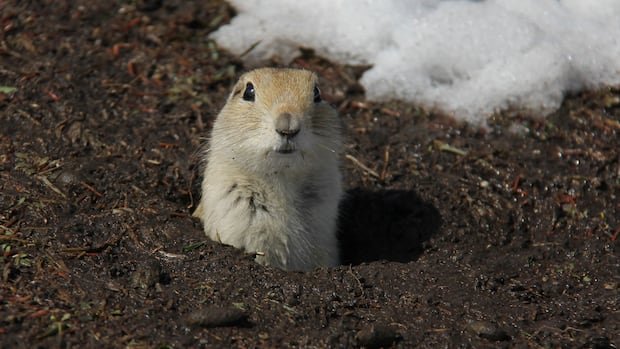

Ottawa has granted permission for the controlled and temporary emergency application of strychnine in Alberta and Saskatchewan to combat the substantial damage caused by an infestation of Richardson’s ground squirrels, commonly known as gophers.
Both Alberta and Saskatchewan jointly submitted a revised emergency-use request to Health Canada after the Pest Management Regulatory Agency rejected an earlier proposal in February. The agency had prohibited strychnine use two years ago due to concerns about risks to other wildlife species, including endangered species like the swift fox and burrowing owl that might consume poisoned carcasses.
In a news release on Monday, Health Canada stated that the approved request from the provinces included additional restrictions and mitigation measures to reduce the environmental impact of the rodent poison to an acceptable level.
“This is fantastic news for farmers across the Prairies,” expressed RJ Sigurdson, Alberta’s minister of agriculture and irrigation. He emphasized the significance of this decision for the agricultural industry, providing producers with necessary tools to manage their operations effectively and maintain high-quality products.
Under the Pest Control Products Act, Ottawa is allowing the two provinces to register strychnine under an emergency registration until November 2027.
Farmers in Alberta and Saskatchewan have advocated for the reintroduction of strychnine to address the increasing populations of Richardson’s ground squirrels that pose a threat to various crops. Strychnine, in a two percent liquid form, was commonly used for gopher control on farms in both provinces before its phased-out implementation by the federal government in 2020, ultimately leading to a complete ban in 2024 due to environmental concerns.
“Saskatchewan producers have highlighted the challenges they encounter in managing gophers with the limited available tools,” mentioned David Marit, Saskatchewan’s minister of agriculture, expressing satisfaction with the approval of the emergency-use request as a practical solution for producers to safeguard their crops and pastures from ongoing damage.
Wade Nelson, a farmer near High River, Alberta, shared his experience of losing 170 acres of canola crops to a gopher infestation, emphasizing the critical role of strychnine in managing the issue effectively. He expressed gratitude for the government’s decision and hoped for an extension of the authorization beyond 2027 for continued support in combating the problem.
Nelson emphasized the importance of proving the safe and efficient use of strychnine to ensure its continued availability for managing gopher infestations without facing uncertainties about its future use.