
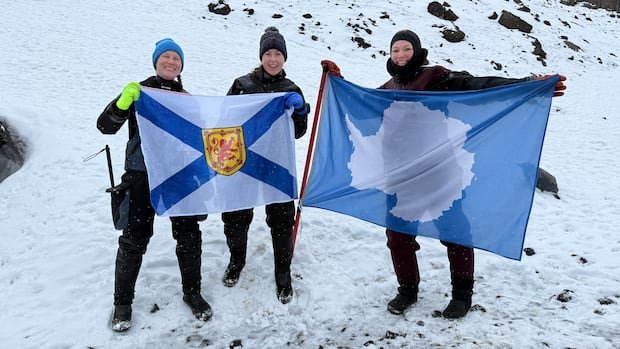

Katie MacIntosh had long harbored the desire to explore Antarctica, but her initial venture onto the icy continent hit a snag. Opting to snorkel from her zodiac to shore, she quickly discovered a leak in her wetsuit.
Reflecting on the experience, MacIntosh described a mix of physical discomfort and emotional elation at setting foot on a continent so rarely visited, particularly by women in the scientific community. The excursion was part of a month-long research mission to Antarctica undertaken by three geoscientists from Nova Scotia, among a group of two dozen female experts from various countries studying climate change effects.
In a stroke of luck, three of the lead researchers in underwater robotics hailed from Nova Scotia, showcasing the province’s strong presence in ocean science. MacIntosh, a marine geomatics engineer based in London, was responsible for planning and technology during the expedition.
The team spent weeks diving and snorkeling to collect underwater data, studying leopard seals’ behaviors, examining whale bones, and mapping glaciers. Aside from the serious research, they also infused a touch of their maritime heritage by playing regional tunes while deploying robotic equipment from the zodiac.
Heather Pearce, a geoscientist consultant with WSP Canada from Chester, enjoyed scuba diving near glaciers to study benthic marine life. She fondly recalled the unique experience of descending into the water from the boat.
Denise Brushett, a mapping specialist originally from the Lake Ainslie area now residing in Halifax, was captivated by the breathtaking sights in Antarctica, including whales, icebergs, and melting glaciers. The team discovered newly formed lagoons and evidence of glacier retreat through fresh ridges and boulders.
Brushett now feels compelled to share their observations with others and plans to analyze the data gathered during the expedition. She and her colleagues aim to raise awareness about climate change by speaking at schools in the coming year.
The transformative journey left a lasting impact on the researchers, who are eager to disseminate their findings and inspire action on climate change.