
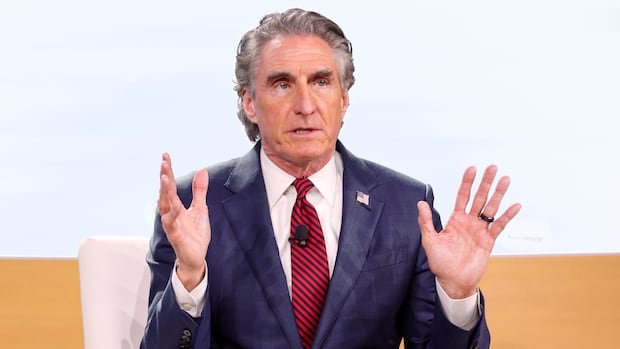

US Interior Secretary Doug Burgum recently visited Venezuela with oil and mining industry leaders to promote the untapped potential of the country’s oil and gas reserves. At a conference in Houston, Burgum emphasized the significant opportunities in Venezuela’s energy sector. He highlighted the abundance of resources available in the country.
Energy Secretary Chris Wright also expressed support for increasing Venezuelan production, aligning the interim government’s goals with those of the US administration. However, there are uncertainties regarding whether oil and gas executives are willing to invest due to various challenges in Venezuela, such as safety concerns, political instability, and the need for substantial infrastructure upgrades in neglected oilfields.
President Donald Trump has been urging American oil companies to invest in Venezuela following the overthrow of former President Nicolás Maduro. Despite having the world’s largest crude oil reserves, Venezuela’s oil production has declined significantly over the years due to sanctions and ineffective policies, reaching only 900,000 barrels per day in the past year.
Industry experts estimate that Venezuela requires approximately $183 billion in capital investment by 2040 to restore oil production to three million barrels per day. However, the Trump administration’s efforts have not yet resulted in substantial progress in revitalizing Venezuela’s energy sector, according to Luis A. Pacheco, a former energy executive.
Some companies, like Shell and ExxonMobil, are cautiously exploring potential investments in Venezuela, emphasizing the need for regulatory stability and legal reforms to attract more significant capital inflows. Chevron has increased its oil production in Venezuela, but CEO Mike Wirth acknowledges the necessity for further incentives to drive substantial investments in the country.
Concerns persist over Venezuela’s heavy crude production, which could impact global oil markets. The country must offer foreign investors assurances and policy consistency to offset past instances of asset seizures and contract breaches. As Venezuela navigates its political landscape, including potential elections, there are ongoing discussions about the future of the country’s energy industry.
Opposition leader María Corina Machado presented a plan to boost oil production during the CERAWeek conference in Houston, advocating for full privatization of Venezuela’s oil industry and offering long-term leases to foreign investors. Machado envisions a regulatory role for the state to encourage private sector participation and ensure clear contractual frameworks.
While Venezuela aims to attract foreign investments to revive its energy sector, uncertainties remain about the country’s production capacity and market access. Industry experts emphasize the need for policy stability and legal reforms to instill confidence in potential investors.