
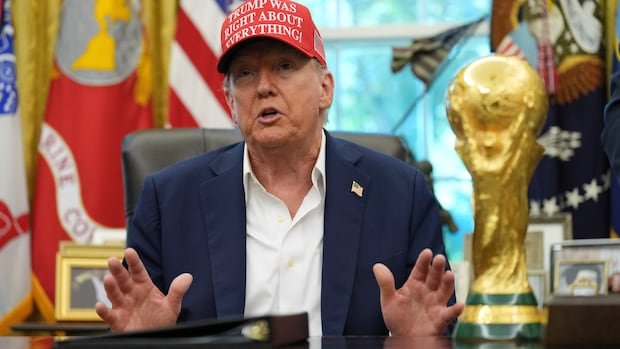

Earlier this week, U.S. President Donald Trump issued a warning that World Cup soccer matches set for Gillette Stadium might need to be relocated. This move is characteristic of a president known for demonstrating authority, yet it also resonates with many individuals.
One key aspect to note is the geographical confusion prevalent in today’s era, where reliance on map apps for even short trips is common. Trump’s critique of Boston’s mayor, Michelle Wu, in relation to Gillette Stadium’s location in Foxborough, about 30 minutes from Boston, reflects this misunderstanding. Comparing the stadium’s proximity to Boston with the Ajax Community Centre’s relation to Toronto illustrates the inaccuracy. If Trump has grievances with Boston or its mayor, perhaps he should focus on the Red Sox schedule.
This threat is another instance of Trump leveraging his significant influence within the sports industry. While most may not possess his wealth or authority, many can relate to feeling they could manage sports operations more effectively.
The distinction lies in Trump’s ability, even before his presidency, to actualize his visions. When his decisions went awry, the repercussions often affected others negatively.
To avoid being labeled a Trump critic from across the border, it’s essential to acknowledge some of his accomplishments. Notably, while owning the New Jersey Generals in the USFL, Trump’s intervention led to increased utilization of star player Herschel Walker, who excelled under this directive.
The USFL’s downfall, chronicled in Jeff Pearlman’s book “Football For a Buck,” underscores Trump’s role in the league’s demise. His push to shift the league’s schedule to fall directly competing with the NFL ultimately led to its collapse, despite subsequent legal victories.
These past events offer valuable insights for navigating the current Trump Era. While he may not always actualize his bold claims, the intent behind his statements is significant. Recent musings about using urban centers for military training exemplify this pattern, with subsequent enforcement actions underscoring his serious intent.
In the context of the 2026 World Cup, the feasibility of Trump redirecting games remains uncertain, as FIFA determines host cities well in advance. Given Trump’s track record, maintaining skepticism towards any motivations behind such proposals is prudent.
Despite Trump’s disparaging remarks towards Boston’s mayor and vague allusions to potential disruptions, the underlying purpose of relocating part of the World Cup remains unclear. Whether driven by a desire to assert authority or pursue alternative objectives, Trump’s actions warrant scrutiny.
Ultimately, Trump’s future endeavors in the sports realm are unpredictable, but one thing is certain – his penchant for strategic maneuvers will persist.