
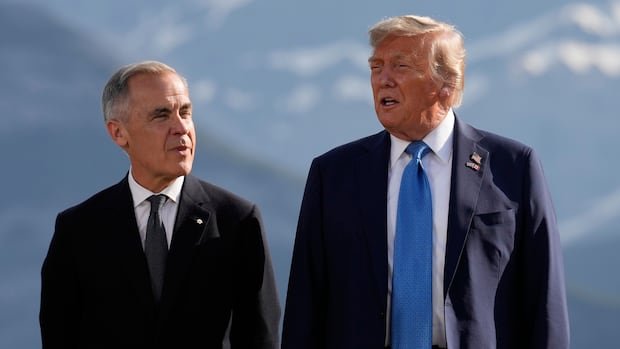

As Mark Carney prepares for his visit to Washington, there is mounting pressure on the prime minister to secure a favorable deal. Simultaneously, the Trump administration is facing increasing demands from various sectors. American farmers are seeking bailouts, bourbon producers are advocating for tariff relief, and automakers are requesting alleviation from the impact of tariffs.
Recent polls indicate a growing number of Americans believe the economy is heading in the wrong direction. Experts warn that the costs of the ongoing trade war will become more pronounced over time, prompting suggestions for the president to reach a resolution sooner rather than later.
Chris Sands, the director of the Center for Canadian Studies at Johns Hopkins University, suggests that a truce on the United States-Mexico-Canada Agreement (USMCA) could be politically strategic before the November 2026 midterms. Such an agreement could end the trade war with the top U.S. trading partners, stabilize prices, and foster conditions for business investments.
Despite some experts urging for a deal, doubts linger about the readiness of Republicans to agree. Industries heavily affected by tariffs, notably the auto sector, are left lobbying for further support. Ford, for example, faces significant tariff-related costs, hindering additional investments in the U.S.
Senator Bernie Moreno has promised “significant” tariff relief for automakers, particularly those with final assembly operations in the U.S. However, the specifics of this relief remain uncertain, raising questions about potential exemptions for Canadian auto parts or steel.
In the midst of trade tensions, the cost of bailouts for sectors impacted by the trade war continues to rise rapidly. American soybean farmers, for instance, have been particularly affected by Chinese tariffs, leading to a loss of access to the Chinese market.
The prospect of relief measures for farmers has been discussed, with estimates ranging from $10 billion to $50 billion. Lobbying on trade-related issues has surged, reaching over $900 million in spending in the first half of 2025, drawing criticism from some conservative allies.
Trade experts caution that as the trade war persists, the true costs of tariffs will become more evident. Businesses, including major corporations like Ford and Apple, have absorbed tariff-related expenses but may soon pass on these costs to consumers.
Amid these challenges, the need for a trade resolution is emphasized. While pressure mounts on Carney to secure a deal, the escalating costs and significant bailouts underscore the mutual interest of the U.S. in achieving trade peace. Experts caution that while such arguments may have been persuasive in the past, the current climate presents new hurdles to overcome during the upcoming meeting between both leaders.