
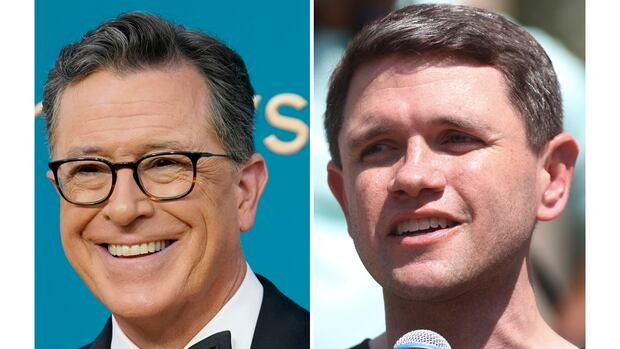

Late-night host Stephen Colbert revealed that his scheduled interview with Democratic Texas Senate candidate James Talarico was removed from the Monday night broadcast due to concerns from the network about potentially violating regulatory guidelines set by the Trump administration regarding equal time for political candidates. The decision came shortly before the start of early voting in the Texas primary elections, where competitive Senate nomination races are underway in both major parties.
Colbert explained on his show, “The Late Show with Stephen Colbert,” that network lawyers directly informed them that they could not have Talarico as a guest on the show. Furthermore, he mentioned that he was instructed not to even mention the absence of Talarico on the broadcast. Despite CBS refuting Colbert’s account and denying that they were prohibited from interviewing Talarico, they clarified that legal guidance was provided to avoid triggering the FCC equal-time rule.
The Democratic primary race in Texas is heating up as media outlets navigate evolving broadcast regulations instituted during the Trump administration. Talarico is competing against U.S. Rep. Jasmine Crockett for the nomination, with both candidates gaining national recognition through viral social media content. On the Republican side, incumbent Sen. John Cornyn faces a tough challenge from Texas Attorney General Ken Paxton and U.S. Rep. Wesley Hunt.
Talarico shared a snippet of his Colbert interview online, labeling it as “the interview Donald Trump didn’t want you to see.” He expressed concerns that the situation represented a form of “cancel culture” originating from higher authorities. The FCC recently issued guidance warning talk show hosts to provide equal time to political candidates, a departure from the traditional exemption granted to such programs. Colbert subsequently posted his interview with Talarico on YouTube, emphasizing that it would only be available online and not on broadcast.
As the primary elections unfold, political dynamics are shifting in Texas, with candidates vying for voter support amid legal and personal controversies. The FCC’s stance on equal time provisions for broadcast media has sparked debates among late-night hosts and raised questions about potential political influence on television programming. Despite challenges and controversies, the candidates are actively campaigning to secure their respective party nominations and position themselves for the general election.