
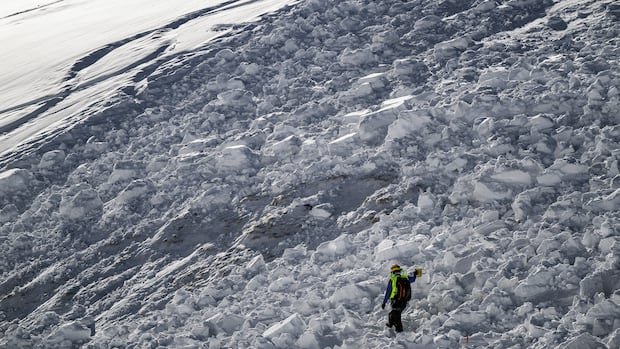

In February, five individuals lost their lives in separate snow slides in British Columbia and Alberta. During the same period, over a dozen fatalities were reported in California and Utah, with a tragic incident in California claiming nine lives. Across Europe, from Andorra to Slovakia, a total of 125 deaths have been recorded due to avalanches this season.
These incidents emphasize the constant danger associated with backcountry activities, even for experienced individuals well-prepared for avalanche risks. They also underscore the challenges in accurately predicting avalanche occurrences.
Experts interviewed by CBC News shed light on the formation of avalanches, their unpredictable nature, and the potential impact of climate change on their severity.
Avalanches are described as moving masses of snow at a visible speed, typically descending along a slope when a strong layer rests upon a weaker one, requiring a trigger to set off the slide. The timing and conditions under which these layers form are crucial in determining avalanche risk.
Different types of avalanches exist, ranging from loose, less cohesive slides to dense, water-saturated chunks, each with distinct triggers and characteristics. Particularly dangerous are ‘slab’ avalanches, cohesive snow pieces breaking off slopes.
Despite extensive knowledge on avalanche structure and development, accurately predicting when they will occur remains challenging due to the unique nature of each event. Variations in snowpack composition, even within short distances, contribute to the difficulty in forecasting avalanches.
Climate change’s influence on avalanches is a topic of interest, with experts noting its potential impact on snowpack stability. However, linking specific weather events to broader climate change trends poses challenges due to the intricate relationship between temperature fluctuations and snow accumulation.
To mitigate risks associated with avalanches, experts recommend thorough preparation, including staying informed about local forecasts, possessing appropriate gear, and undergoing avalanche safety training. Additionally, establishing clear group dynamics and decision-making protocols can enhance safety when engaging in outdoor activities in avalanche-prone areas.