
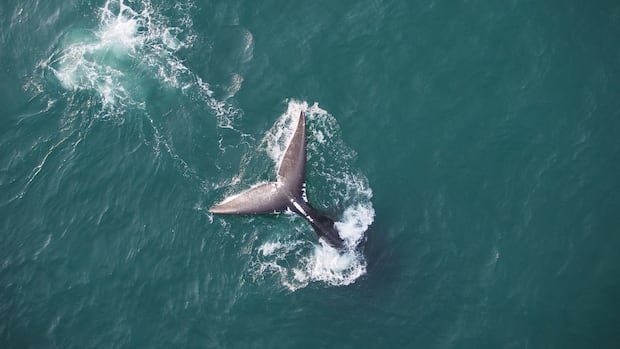

The United States is considering altering regulations aimed at safeguarding the North Atlantic right whale, a critically endangered species found along the East Coast. The National Oceanic and Atmospheric Administration (NOAA) of the country has highlighted the potential use of modern technology to help prevent ship strikes on these whales while meeting industry requirements. NOAA Administrator Neil Jacobs emphasized that this move aligns with the President’s agenda of incorporating advanced technologies to support American industries and facilitate efficient regulations.
To address concerns regarding the impact of speed restrictions introduced for larger vessels in 2008, the agency is soliciting external feedback on how to mitigate unnecessary regulatory and economic burdens. However, experts caution that current technological solutions are not sufficient to effectively avert collisions with whales. While technologies like satellites, thermal imaging, and various survey methods aid in whale detection, they fall short in predicting the animals’ movements, making collision prevention challenging.
Moira Brown, the director of science at the Canadian Whale Institute, noted that infrared cameras mounted on ships can detect whales from a distance but are still in experimental stages and lack the comprehensive coverage needed to prevent collisions. She emphasized the importance of combining new technologies with existing speed regulations for enhanced protection. Despite acknowledging the limitations of speed limits, Brown criticized the proposal to change them as a significant setback for whale conservation efforts.
NOAA’s 2020 report evaluated the effectiveness of speed limit regulations, which require larger ships to reduce speeds in specific areas. While the report indicated a reduction in whale mortalities since the regulations’ implementation, it also highlighted the need for further enhancements, such as stricter enforcement and broader application across vessel sizes and locations.
Captain Bob Peacock, a veteran ship pilot in Maine, emphasized the importance of adhering to speed limits and effective communication to prevent whale strikes. He stressed the role of traditional methods alongside emerging technologies, citing drones as effective tools for whale spotting but underscoring the value of human expertise in avoiding collisions. Peacock affirmed his commitment to maintaining a speed of 10 knots regardless of regulatory changes, underscoring the significance of collaboration and caution in shared waters.
Notably, documented cases of North Atlantic right whale deaths attributed to ship collisions underscore the urgency of conservation efforts. With the whale population dwindling due to various threats, including entanglement and vessel strikes, the need for comprehensive measures to protect these creatures becomes increasingly critical.