
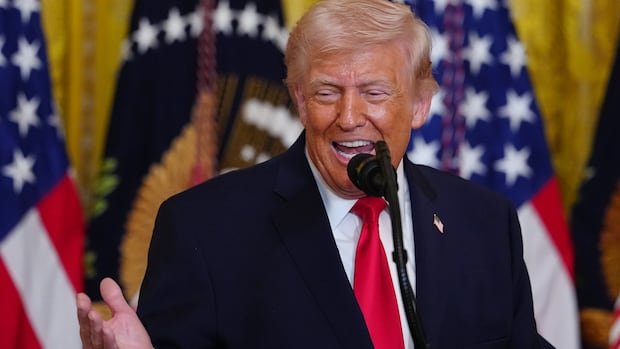

The Trump administration has broadened its trade probes to encompass 60 nations, including Canada, to reinforce the tariff strategies of the U.S. president.
U.S. Trade Representative Jamieson Greer, speaking with CNBC on Friday, emphasized the urgency of the investigations, aiming for swift progress within a few months.
Under Section 301 of the Trade Act of 1974, Greer’s office disclosed investigations into the European Union and several other countries. Subsequently, an update released on Thursday expanded the list of countries under scrutiny, evaluating if their policies unfairly hinder U.S. commerce.
Following a recent U.S. Supreme Court decision invalidating President Donald Trump’s favored tariff mechanism for “Liberation Day” tariffs and duties related to fentanyl on Canada, Mexico, and China, Trump imposed a 10% global tariff using Section 122 of the 1974 Trade Act. Notably, goods compliant with the Canada-U.S.-Mexico Agreement (CUSMA) are exempt from these tariffs.
These Section 122 tariffs can escalate to 15% and will expire after 150 days unless extended by Congress, a scenario deemed unlikely. Canada is also grappling with Trump’s separate Section 232 tariffs on specific sectors like steel, aluminum, automobiles, and cabinetry.
Trump’s aim is to establish more enduring tariffs through Section 301 investigations, a process involving public consultations and reports. Greer highlighted that if unfair trading practices such as subsidies, overcapacity, or forced labor are identified in a country, efforts will be made to address the issues. Failure to resolve them may result in the imposition of tariffs by the Trump administration.
The ongoing 301 investigation of Canada is linked to longstanding issues in the Canada-U.S. trade relationship, including Trump’s repeated criticism of Canada’s dairy supply management system. These investigations coincide with the upcoming mandatory review of CUSMA involving Canada, Mexico, and the U.S.
While Trump has expressed skepticism about the trade pact, labeling it “irrelevant” and questioning its efficacy, the U.S. has initiated negotiations on the CUSMA review with Mexico, which is also subject to a 301 investigation. Meanwhile, Canada and the U.S. have not yet announced similar actions.
Despite Greer’s assertions of barriers hindering negotiations with Canada, such as provincial restrictions on U.S. alcohol sales, a recent meeting took place in Washington between Greer and Canada’s trade team, including Janice Charette, Mark Wiseman, and Dominic LeBlanc.