
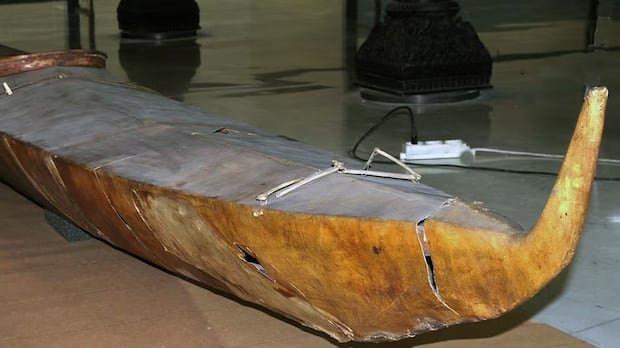

A kayak that has been stored in the Vatican Museums for many years is set to return to Western Arctic communities in Canada. This ancient vessel, used by the Inuvialuit people for hunting seals, walrus, and whales, holds significant cultural importance. Negotiations between the Vatican and the Canadian Catholic Church have progressed well, with plans for the kayak and other Indigenous artifacts to be repatriated by the end of the year.
The Canadian Conference of Catholic Bishops (CCCB) has been working closely with Indigenous Peoples on the return of these artifacts, emphasizing the importance of returning them to their originating communities. The official announcement regarding the repatriation will be made by the Holy See in the coming weeks.
The artifacts, including the rare kayak, will initially be housed at the Canadian Museum of History for assessment of their condition, age, and origins. A committee of Indigenous representatives will collaborate to decide on the final placement of these items. The repatriation process is structured as a ‘church-to-church’ donation, allowing the Vatican to avoid setting a precedent of returning cultural objects directly to nations or communities.
These artifacts, sent to Rome in 1925 for a world exhibition, were part of a collection of objects taken from Indigenous communities during a time of forced conversion and cultural suppression. The return of these items, which also include a face mask from Haida Gwaii and other Indigenous artworks, is an essential step in the healing journey for many residential school survivors and Indigenous communities.