
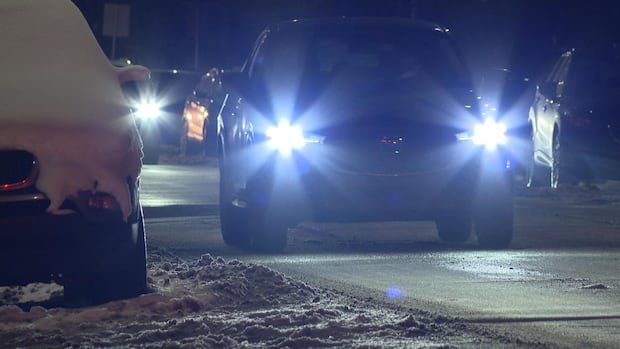


An uptick in patients experiencing night vision difficulties has been observed by Saskatoon optometrist Rachael Berger.
She shared with The Current guest host Peter Armstrong that many individuals, regardless of age, are reporting challenges with night vision, attributing it to the increased usage of LED headlights in vehicles.
According to Berger, the brightness of LED headlights can be disruptive to the eye’s natural adjustment to darkness, leading to discomfort and visual strain when driving at night.
Advocates are urging both the federal government and car manufacturers to reconsider regulations and industry standards on bright headlights, emphasizing the importance of ensuring driver visibility without compromising safety.

Bright LED headlights, known to be up to four times brighter than other light sources, can induce discomfort glare, a condition characterized by visual fatigue caused by intense light exposure, Berger explained. The sudden, intense light flashes are sometimes referred to as “glare monsters.”

The increasing use of extremely bright LED headlights in new cars is causing discomfort glare, experts warn.
Additionally, prolonged exposure to intense headlights, whether from oncoming vehicles or rearview mirrors, can also contribute to discomfort glare, as noted by vehicle lighting consultant Daniel Stern.
Stern, the chief editor of Driving Vision News in Vancouver, expressed concerns about the potential safety risks associated with cognitive overload caused by glare distractions while driving.
He emphasized the need for aligned regulations governing both new and existing vehicles to address headlight brightness issues effectively.
Previously, routine headlight adjustments during vehicle inspections were common practice, but Stern highlighted a shift away from this practice, emphasizing the importance of stringent regulations for headlight alignment and bulb standards.
Transport Canada’s 2018 updates