
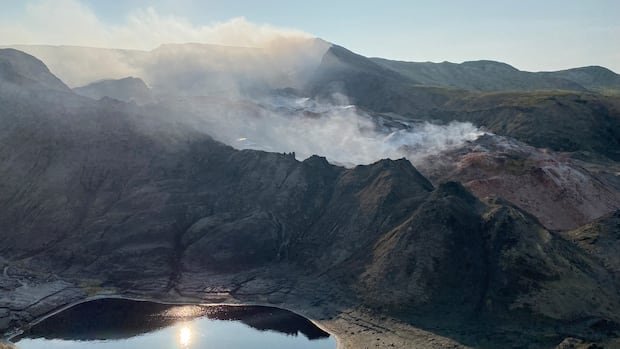

Calgary scientists have identified some of the most acidic natural water in the world in the Northwest Territories. The thawing of permafrost and land erosion from the Smoking Hills Formation, driven by climate change, is leading to the release of toxic metals and highly acidic solutions into rivers, bays, and potentially the Arctic Ocean.
During visits to the location in 2017 and 2023, Geological Survey of Canada researcher Stephen Grasby was astonished by the extent of toxicity and acidity in the ponds around the Smoking Hills. He described it as a demonstration of nature’s power, producing waters more toxic and acidic than those found at any industrial site.
The phenomenon is attributed to toxic metals trapped in pyrite minerals, commonly known as “fool’s gold,” buried underground 85 million years ago during volcanic activity in Arctic Canada. With the exposure of pyrite to oxygen due to slumping, extreme heat and large quantities of metals are being released into the surrounding water bodies.
Grasby noted a significant transformation in the landscape between his visits, with ponds turning black, resembling oil rather than water, and exhibiting such high acidity that standard pH meters struggled to measure accurately. Additionally, evidence suggested ground temperatures exceeding 1,200°C, far beyond the equipment’s capacity to measure.
The ongoing thawing of permafrost, exacerbated by climate change, further complicates the situation. While permafrost thawing is not new, the resulting impacts on water quality are only beginning to be studied, according to leading researcher Elliott Skierszkan from Carleton University.
The potential environmental consequences of the Smoking Hills formation remain largely unknown, raising concerns about metal contamination spreading to other water bodies. Reports of rivers turning orange in Alaska and northern Canada due to metal contamination are worrying, with implications for river ecosystems and aquatic life.
Extensive research is deemed crucial by Grasby and Skierszkan to comprehend the implications of climate change on the Smoking Hills fully. They emphasize the importance of understanding and addressing the accelerated processes affecting the otherwise pristine Arctic environment.