
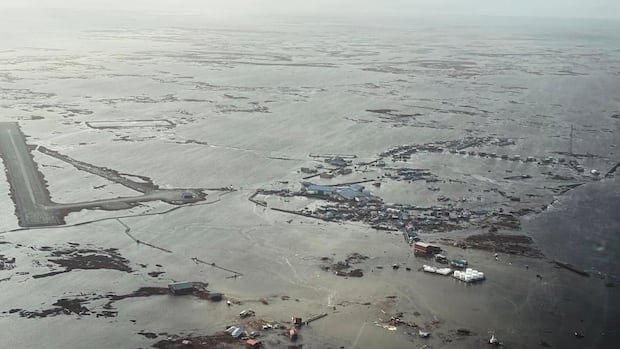

Rain and strong winds were predicted on Wednesday along the Alaskan coast as two villages faced severe devastation from the aftermath of Typhoon Halong, with authorities struggling to find shelter for over 1,500 displaced residents. The weekend storm brought intense winds and storm surges that severely impacted the low-lying Alaska Native communities situated along the Yukon-Kuskokwim Delta, approximately 800 kilometers away from Anchorage.
Tragically, one person lost their life, and two individuals were reported missing. The Coast Guard conducted rescue operations, saving two dozen people whose homes had been swept out to sea. Hundreds of displaced residents sought refuge in school shelters, including one lacking functional toilets.
The inclement weather followed a prior storm that hit western Alaska. Over 1,500 individuals were displaced across the region due to the consecutive storms. Some evacuees were airlifted to a shelter established in the National Guard armory in Bethel, a city with a population of 6,000. Plans were being considered to transport evacuees to longer-term shelters or emergency housing in Fairbanks and Anchorage.
The hardest-hit communities included Kipnuk, with a population of 715, and Kwigillingok, with a population of 380. These communities are not connected to the state’s main road system and are only accessible by water or air during this time of the year.
Mark Roberts, the incident commander with the state emergency management division, described the situation in Kipnuk as catastrophic. Residents faced significant challenges as their homes were destroyed and swept away by the floodwaters.
Brea Paul from Kipnuk shared a heartbreaking account of witnessing numerous homes floating away under the moonlight, feeling helpless as they blinked their lights for assistance. The community gathered in the school gym to seek solace and plan their next steps, uncertain about their future.
In Kwigillingok, one woman was found deceased, and the search for two missing men was called off. The school, the only facility with full power in town, accommodated 400 residents despite lacking functional toilets. The emergency management office reported significant damage to every home in the village, with several homes drifting from their foundations.
Various areas experienced flooding and erosion, with reports of fuel drums floating in communities. The National Guard was actively engaged in emergency response efforts, utilizing breaks in the weather to deliver essential supplies such as food, water, generators, and communication equipment.
Officials emphasized the long road to recovery ahead for the impacted communities and stressed the need for ongoing support. Rebuilding efforts would require transporting supplies into the affected areas, with winter fast approaching. Rick Thoman, an Alaska climate specialist, highlighted the resilience of the Indigenous communities in Alaska but acknowledged the immense challenges posed by the widespread damage caused by the storm.
The storm’s intensity was attributed to the warming surface waters of the Pacific Ocean, influenced by human-induced climate change, resulting in more severe weather events. This incident echoes the destruction caused by Typhoon Merbok three years ago across western Alaska, highlighting the region’s vulnerability to extreme weather conditions.