
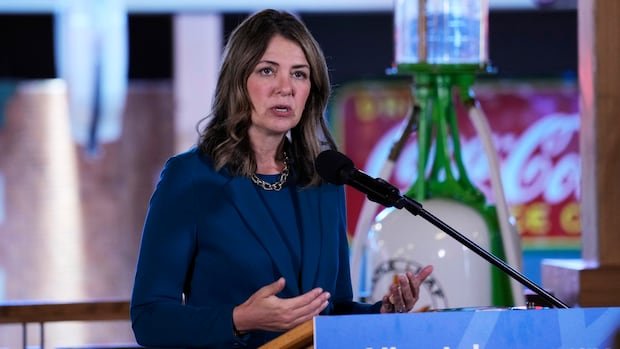

After Alberta Premier Danielle Smith declared her government’s intention to submit an application to the federal Major Projects Office for a new bitumen pipeline to the northern coast of British Columbia, reactions were swift and varied. While many groups expressed enthusiasm and support for the premier’s proposal, others voiced skepticism, concern, and opposition.
Premier Smith promptly presented her case directly to the primary obstacle, British Columbia, emphasizing the need for collaboration between the two provinces and extensive Indigenous consultation to ensure the success of the project.
However, the initial responses indicated potential challenges ahead. Several First Nations in B.C. swiftly opposed Smith’s plan, joined by B.C. Premier David Eby. Despite lacking a specific route or private financial backing for construction and operation, the proposed pipeline received backing from business groups and federal Conservative Leader Pierre Poilievre.
Opinions on Smith’s proposal vary widely, with diverse stakeholders weighing in on the matter. First Nations groups in B.C., such as the Heiltsuk Tribal Council, vehemently oppose the pipeline due to past environmental disasters, like the Nathan E. Stewart oil spill in 2016. They emphasized the risks associated with oil pipelines and tankers to B.C.’s coastal waters.
On the other hand, business organizations like The Canadian Association of Petroleum Producers and The Business Council of Alberta expressed support for the initiative, citing economic benefits and the potential for growth in the energy sector. They stressed the importance of collaboration and early engagement with Indigenous communities.
Climate and environmental groups, including the Pembina Institute and Environmental Defence, raised concerns about the environmental impact of the pipeline, highlighting potential risks to ecosystems and Indigenous territories. They called for a more balanced approach that considers climate change implications.
Analysts from CIBC acknowledged the challenges facing the project, citing political and economic hurdles that could hinder its progress. They noted the complexities involved in moving a pipeline project from development to implementation, despite recent legislative changes.
Clean Prosperity, a climate policy organization, endorsed the pipeline proposal under the condition that it aligns with decarbonization efforts. They emphasized the importance of pursuing low-carbon initiatives alongside infrastructure projects to meet global demands and ensure long-term carbon competitiveness.
In conclusion, the debate surrounding Premier Smith’s pipeline proposal reflects a diversity of perspectives and concerns from various sectors, highlighting the complex considerations involved in major infrastructure projects.